 ©Ben Kuhlmann
Key programme themes
The programme features various themes that explore areas of everyday life and make different dimensions of design tangible throughout the WDC year.
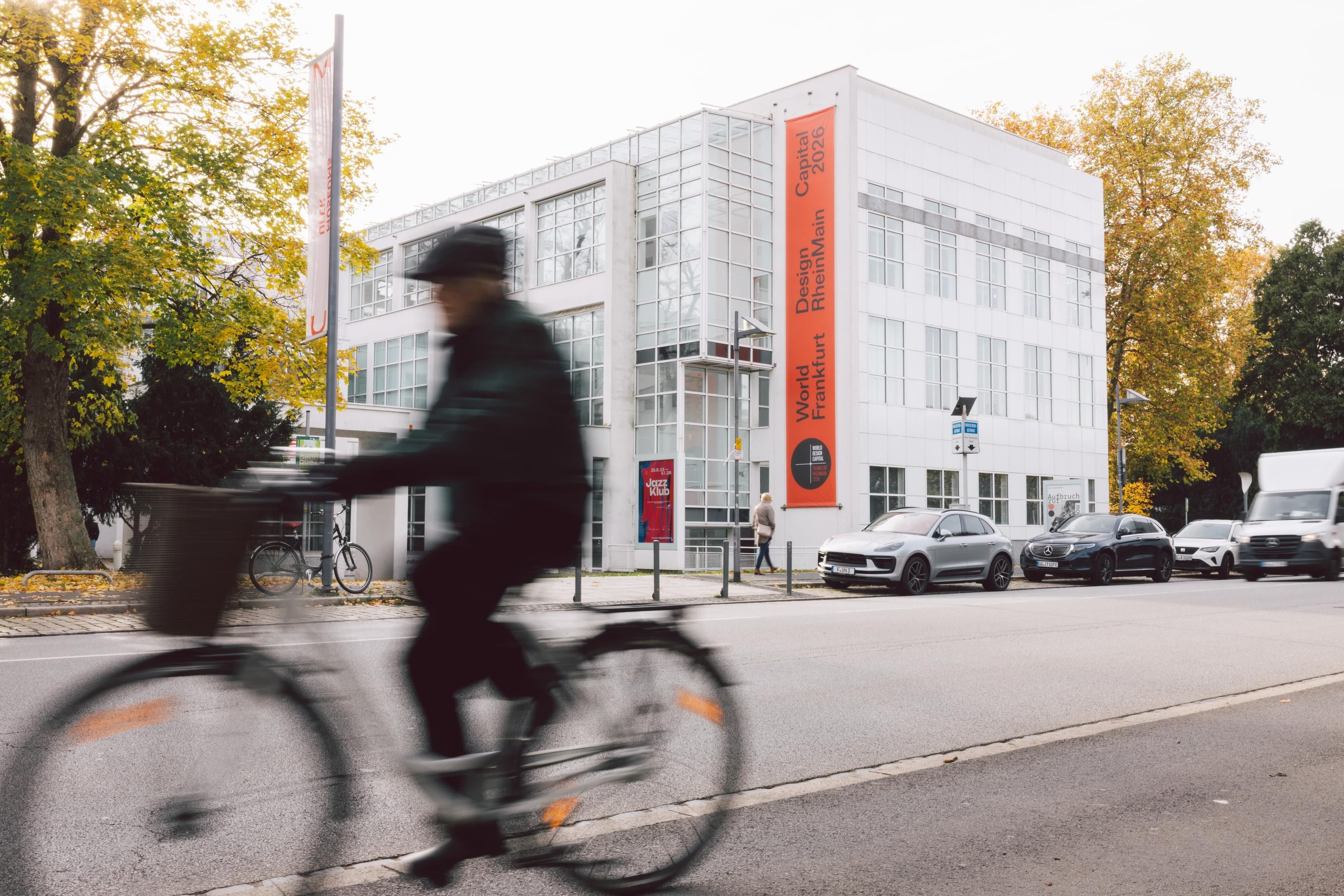
More information about WDC 2026 is available year-round at the WDC Hub at the Museum Angewandte Kunst or at central information points across the region.
Shaping Living Environments together
February/March/May
How we live, build, and move shapes our daily lives. Sustainability, climate protection, technological progress, and social participation all play a role. World Design Capital Frankfurt RheinMain 2026 highlights how climate-adaptive construction, modular housing, and circular architecture can work together with future-ready mobility – from e-mobility and sharing systems to connected infrastructure.
At the same time, public spaces and participatory formats, such as communal cooking or gardening, create opportunities for people to meet and engage. The focus is on how design can bring nature back into the city, make sustainable choices easier, and use technology responsibly – for a resilient, sustainable, and inclusive future we shape together.
Rethinking Learning, Exploring Design
April/July
Education is more than just imparting knowledge. It empowers us to shape our environment consciously, creatively, and responsibly. Design plays a central role, transforming the way we learn – in schools, universities, and beyond traditional educational spaces. New learning environments, methods, and tools foster curiosity, collaboration, and independent thinking – from children and teenagers to lifelong learners.
Designers and experts bring knowledge directly to people, while city squares, pavilions, and excursions become spaces for learning. Signature formats like the WDC Pavilion or the WDC Campus, involving around 40 universities from the region as well as national and international partner cities, combine labs, exhibitions, workshops, and discussion spaces – making education a driving force for a meaningful present and future.
Future Cycles – Design, Crafts, and Industry
June
Design plays a central role in industry and the economy. Rather than constantly creating new products, the focus shifts to responsible consumption, reuse, and recycling. Concepts like Cradle-to-Cradle and new circular economy practices show how design can combine ecological responsibility with economic success.
In June, the Open – Design Week Frankfurt RheinMain will showcase how design drives a resource-efficient, future-ready economy. For ten days, the Frankfurt RheinMain region becomes an international stage for collaborative creation: highlighting the work of local designers and producers, while connecting visionary regional design with ideas from around the world. The Open brings together a trade fair, networking platform, stage, and forum for new approaches – with a focus on regional ideas, cross-industry collaboration, and partnership across Frankfurt, Offenbach, Wiesbaden, and Darmstadt.
Engaging all the Senses
August
Through movement, sound, atmosphere, touch, or taste, democracy is not only discussed or shaped – it is directly experienced and felt. We approach the design of our society through sensory, visual, and physical experiences, opening up new perspectives and ways of engaging. Artificial intelligence and digital platforms expand these possibilities by supporting collaborative creation and new forms of interaction.
A central highlight of this focus is the free Module Festival at the Kulturcampus in Frankfurt in August 2026. Its goal is to bring people together, open up fresh perspectives, and push the boundaries of creativity.
Design in Dialogue: in Politics and Society
September–December
Design can make political processes clearer and more accessible – for example, through user-friendly public services, new forms of citizen participation, or international collaboration. It is not about ready-made solutions, but about using design as a method to address social inequality, rethink memory, and actively shape democratic processes.
The Design Policy Days in November, as the official conference of the World Design Organization (WDO), bring together policymakers, designers, and researchers to develop concrete recommendations for design-driven governance. The conference culminates in the Design Action Plan Frankfurt RheinMain, providing impulses for a forward-looking European design policy.