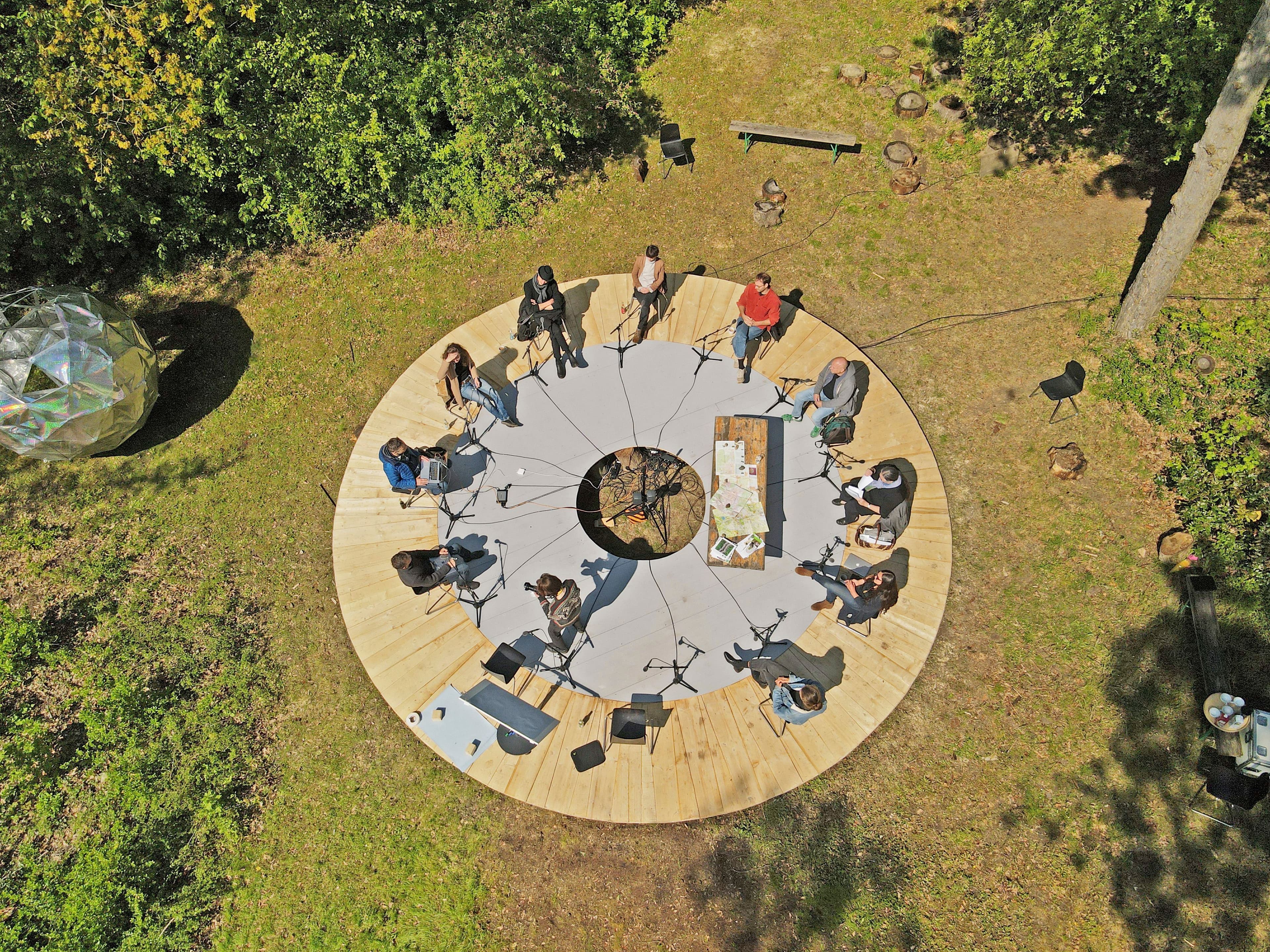
 ©Kultur einer Digitalstadt
Re-Negotiating Space
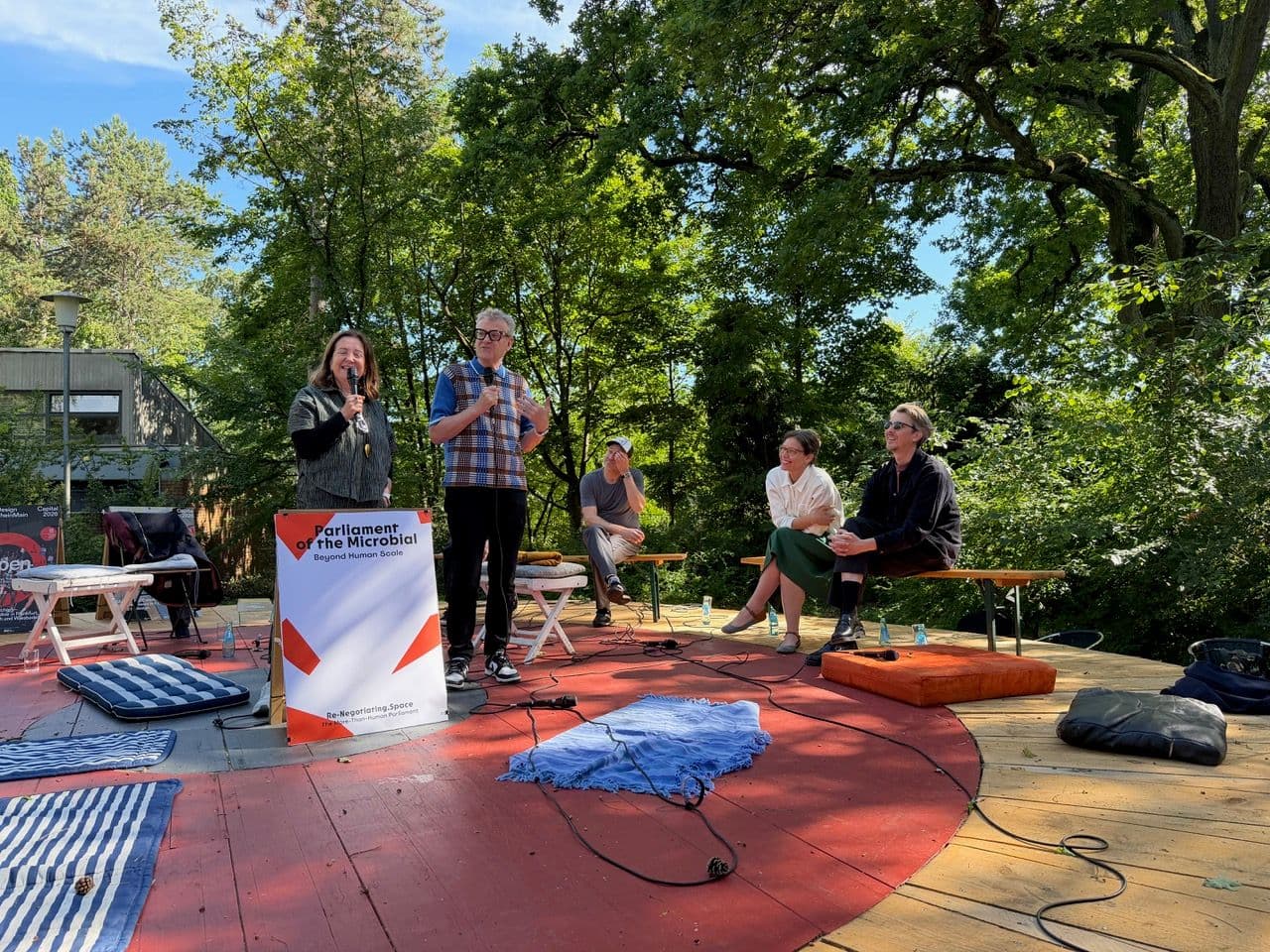
RNS #2 Beyond Anthropocene — The Voice of the Planet
Kultur einer Digitalstadt e.V. & hortopia.org
...
Anthropogenic mass has exceeded living biomass on Earth since 2020. This fundamental imbalance calls for a radical re-negotiation of the way our built environment consumes space. How can we move from governance models trapped in narratives of efficiency and exploitation to genuine agency that enables all actors—humans and nature alike—to collaboratively shape the transformation of our urban habitat?
Systemic adaptation pressure on our ecosystem has become so complex that purely human decision-making processes have reached their limits. Recognising nature as an equal actor becomes more than a political statement but a survival strategy for resilient cities and their inhabitants. How can we integrate planetary perspectives into urban decision-making processes, and what instruments enable us to make the «voice» of ecosystems, species, and natural cycles audible?
Part I Book Presentation
10:30 AM – 12:30 PM
Due to limited capacity, a reservation via the project website is required
Part II Workshop
2:00 PM – 3:30 PM
Due to limited capacity, a reservation via the project website is required
Part III Dialogue Session
4:00 PM – 8:00 PM
Dialogue Partners:
Beatriz Colomina, Princeton University. Howard Crosby Butler Professor, known for her extensive work on architecture, art, technology, sexuality, and media.
Mark Wigley, Columbia University, New York. Professor and former dean of the Graduate School of Architecture, Planning and Preservation (GSAPP).
Laurent Sax, Geneva. Urban WASH (Water Sanitation and Hygiene) specialist at the International Federation of the Red Cross (IFRC) with 15+ years expertise in water & sanitation across NGOs, UN agencies and the private sector.
Dr. Séverine Marguin is Director of the Method Lab and a Postdoc Research Fellow in the field of Re-Figuration of Spaces et the Technical University Berlin.
Prof. Dr. Jamie-Scott Baxter is acting professor for urban design and urban development at HafenCity University Hamburg. At the intersection of design and science, Jamie’s work critically questions the possibilities of urban cohabitation in a planetary age.
Philipe Havlik, Darmstadt. Geologist and managing director of the Messel Pit, a UNESCO World Heritage Site.
Related Events
 ©Kultur einer Digitalstadt