 ©Carla Riechardt
AfkV Höchst - Amt für künstlerische Vermessung
social.form
...
As part of WDC 2026, the Office for Artistic Surveying is researching the significance of large-scale structures for the identity of urban spaces, using the Frankfurt district of Höchst as an example.
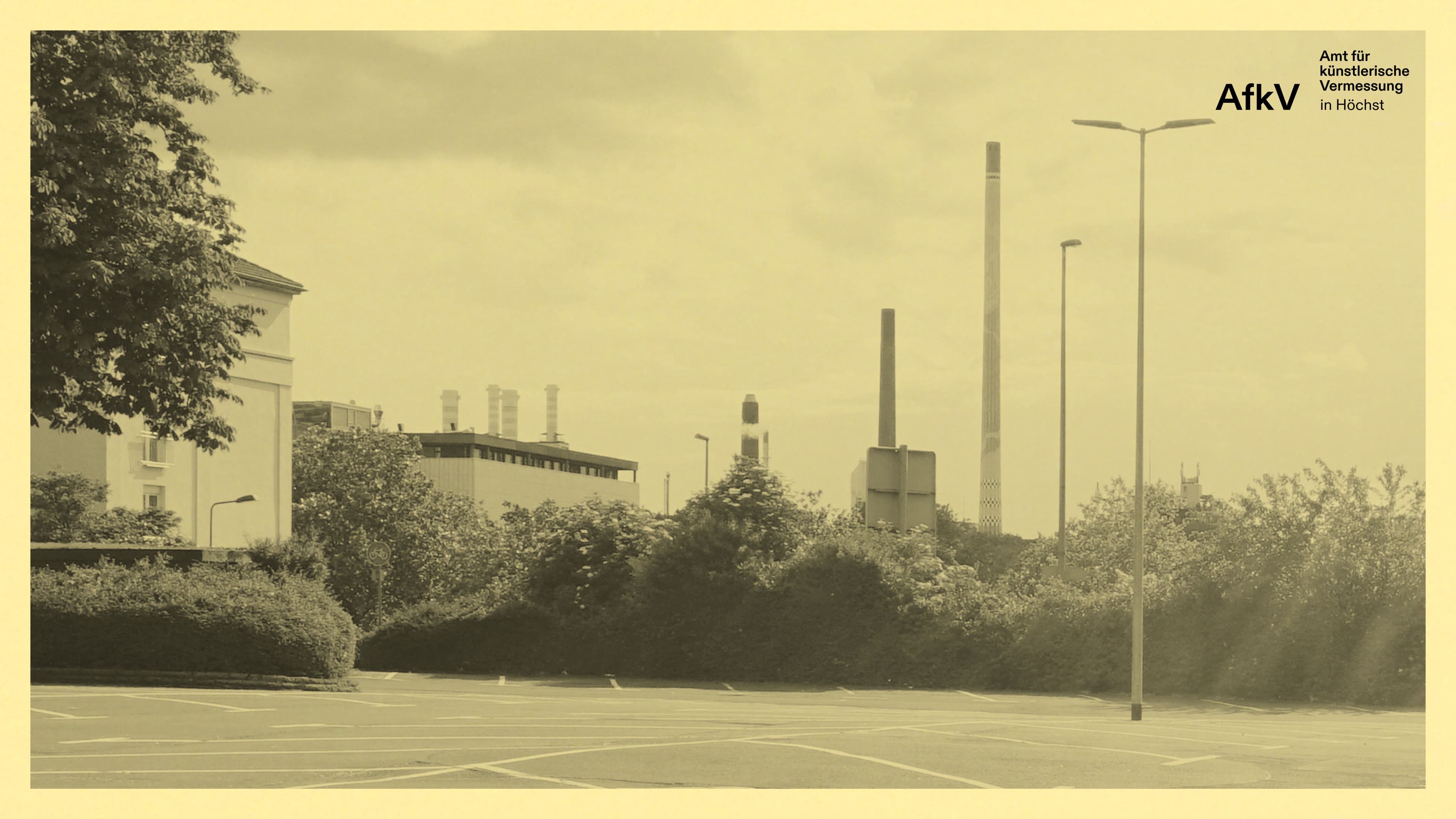
Two surveyors with artistic, design or architectural backgrounds are invited to spend a month in residence examining the Höchst Industrial Park – a distinctive, largely inaccessible large-scale structure. The AfkV coincides with the upcoming opening of the Bolongaropalast in Höchst. Both locations, the palace and the industrial park, are examples of urban spaces of power, production and significance that shape the district: visible in their architecture, invisible in narratives and social structure.
Through artistic perspectives, the project opens up new approaches to the boundaries, images and stories that arise between everyday life, industry, memory and the future – thus creating a space for dialogue about the role of such places for urban society.
The residences offer space for individual exploration of the spatial, historical and symbolic dimensions of the industrial park. A final exhibition, developed in collaboration with social.form, presents and discusses the results with the public.
1. Office Holder: Sarah Hachem
Residency period & workshops: 29 Aug – 26 Sep 2026
Exhibition: 29 Sep – 1 Oct 2026
Sarah Hachem is a Lebanese-German artist based in Berlin. In her multimedia, installation-based practice, she brings together objects, texts, found materials, sound, living matter, and research to create spatial constellations in which scientific, everyday, and poetic perspectives meet on equal terms. Working at the intersection of art, architecture, and artistic research, she explores colonial and social narratives of space, the body, and knowledge, developing site-specific works that question existing structures and reveal new relationships.
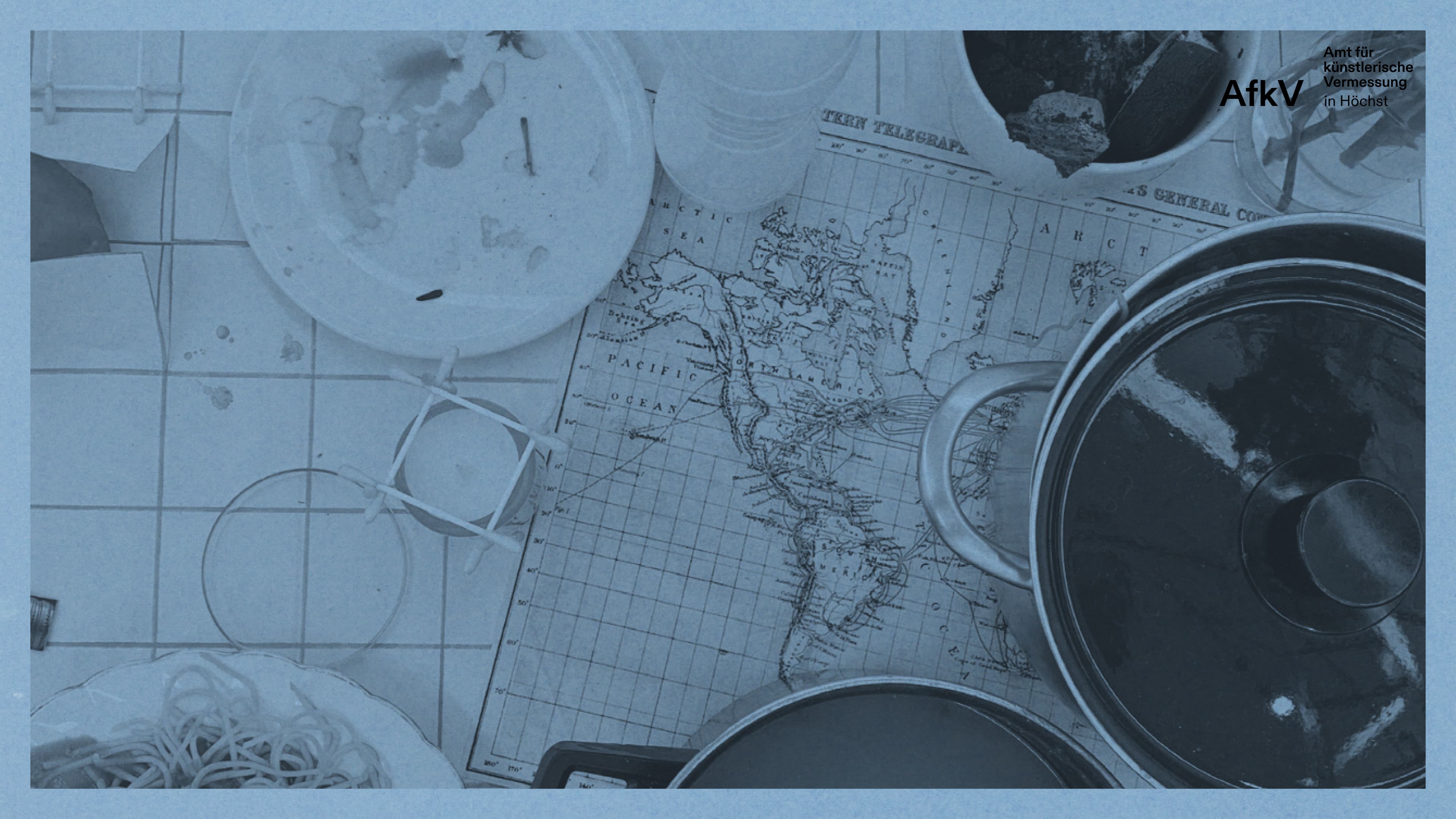
Sarah Hachem’s project begins with the question of how industry shapes everyday life in a neighbourhood and what traces it leaves in its materials. In her installation Surveying in Water (Vermessung im Wasser), she follows the paths of River Main water, plants, fats, alkalis, and other substances through Höchst, investigating how industry, the city, and everyday life are interconnected.
At the centre of the installation is a circuit of pipes and different washbasins connected through a closed water cycle. Water is continuously pumped through the pipes, evoking both the infrastructure of the Höchst Industrial Park and the everyday infrastructures of the city. Handmade soaps, created together with residents of Höchst during workshops, hang from the pipes. Visitors are invited to wash their hands with them, and the soaps gradually change through use.
To produce the soaps, Sarah researches and collects materials from Höchst wherever possible. These materials become part of the installation, making visible the connections between the industrial park, the city, and everyday life through their origins, processing, and journeys. Over time, the water itself accumulates traces of its use.
Surrounding the water circuit are found objects, plants, drawings, historical documents, and materials collected in Höchst. The installation moves between washroom, fountain, soap workshop, laboratory, studio, and archive. As time passes, the circulating water connects materials, traces, people, and stories.
2. Office Holder: Johanna Dembinski
Residency period & workshops: 6 Oct – 2 Nov 2026
Exhibition: 12 Nov – 15 Nov 2026
Johanna Dembinski is an interdisciplinary artist and art educator with a focus on ceramics. Her work begins with an interest in the unresolved and the incomprehensible, drawing on myths, speculation, and superstition as points of departure. Through interviews and participatory processes, she explores how we relate to uncertainty, collecting marginal notes on the supernatural and fantastical explanations for phenomena that resist understanding.
Johanna investigates imagination as a coping strategy, a source of resilience, and a space of possibility for questioning present conditions and initiating transformation. She translates people’s stories into ceramic cartographies, speculative user manuals, and diagrams, creating fictional movements and layered encyclopaedias. She studied Fine Arts at the Bauhaus University Weimar and the Athens School of Fine Arts and lives and works in Leipzig.
For the residency, Johanna Dembinski collaborates with people from Höchst to create a map of local mysteries, doubts, and unanswered questions rooted in the district. While maps usually depict what we know—or believe we have discovered—this project focuses instead on the unknown. What would a map look like if it recorded not facts, but gaps, uncertainties, and questions? How can we map what we do not know?
As part of the artistic surveying process, Johanna invites residents of Höchst to contribute their stories and perspectives. Through interviews and workshops using methods of critical cartography, she gathers observations that are translated into a map of unresolved and unexplainable events across the survey area of Höchst.
The two artists were selected through an open call. The jury consisted of Konstantin Lannert (Historical Museum Frankfurt), Tülay Günes (post-migrant architecture and urban researcher from Höchst), Martin Böttcher (Chair of Raum für kulturelle Fragen e.V.), as well as Jurek Werth (social.form) and Carla Riechardt (social.form).
AfkV is a method of urban surveying developed by social.form, an architecture and urban practice studio for project development, space and action based in Darmstadt. In Höchst, AfkV is being realised in cooperation with the cultural association Raum für kulturelle Fragen e.V., which is acting as the project lead.
The locally based association Raum für kulturelle Fragen e.V. is carrying out the project together with social.form. Local partners already involved include the Historisches Museum Frankfurt, the Frankfurt-Höchst District Management and Projekt Stadt, a brand of the Nassauische Heimstätte | Wohnstadt group. We warmly welcome additional local organisations, initiatives and individuals from the district – please do get in touch if you would like to take part.