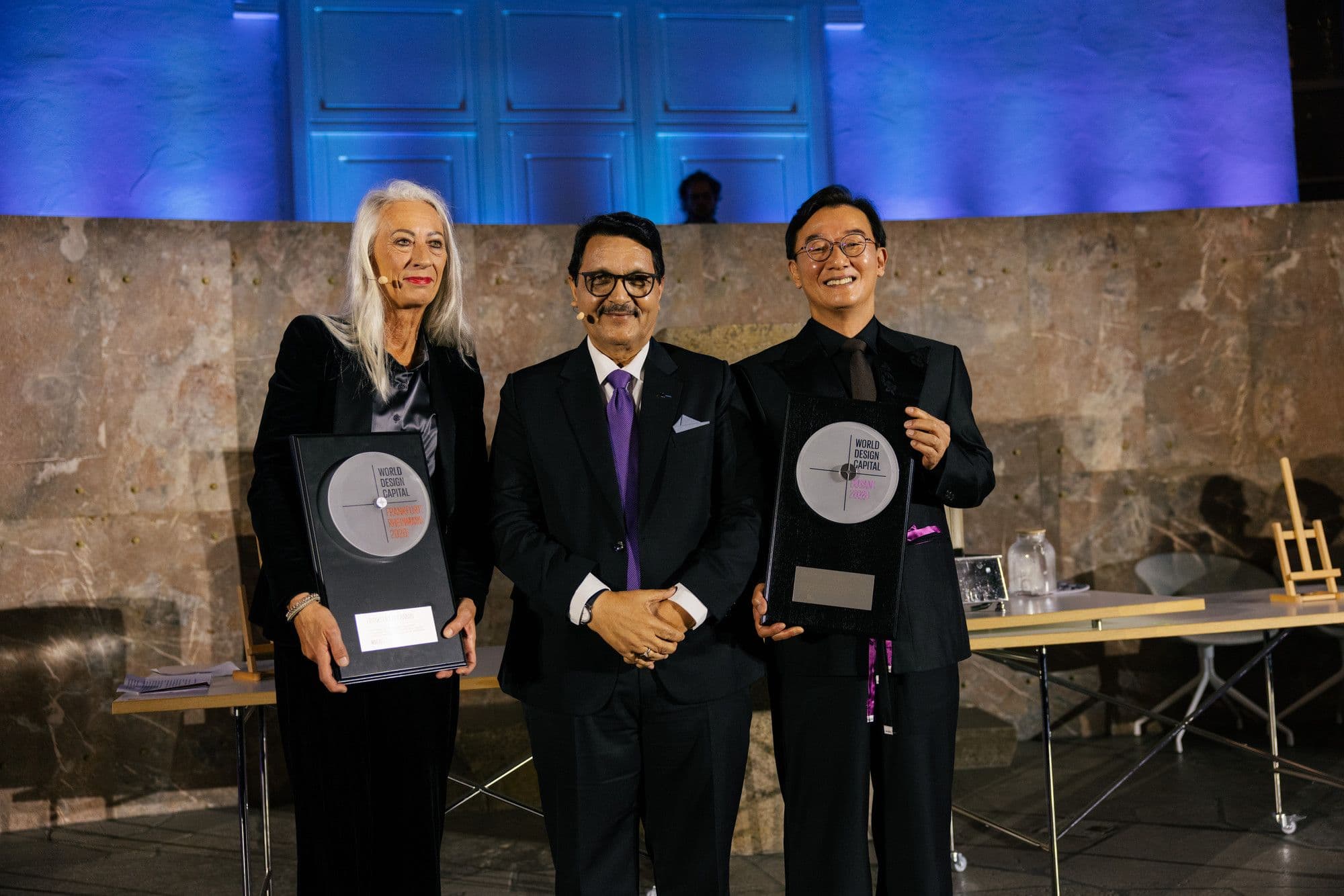
 ©Ben Kuhlmann
World Design Capital Busan 2028
WDC 2026 has built a network that extends far beyond the region’s borders – reaching all the way to Busan in South Korea, the next World Design Capital in 2028. The aim is to keep these newly forged connections and international exchanges alive beyond 2027, and to continue the collaboration between both cities and their networks. At the Design Assembly in Frankfurt’s Paulskirche, this bond was reaffirmed with the official title handover to Busan.
The official motto of World Design Capital® Busan 2028 is Inclusive City, Engaged Design. It represents Busan’s ambition to tackle urban challenges through design, enhance quality of life, and shape a city that better meets the needs of its people.
As South Korea’s second-largest city and a major hub for trade, technology, and the creative industries, Busan offers an exciting setting in which to bridge tradition and modernity through design while responding to the evolving needs of urban society. The programme builds on the city’s existing work across mobility, public space, neighbourhood development, and environmental design—demonstrating how design can contribute to a more accessible, better-connected, and more liveable city.
Local participation is central to this vision. Rather than confining design to specialist circles and institutions, Busan 2028 aims to embed it in everyday life. Residents, local businesses, cultural organisations, and public institutions will all be given the opportunity to help shape their city. The goal is to make the value of design tangible at neighbourhood level and to weave local knowledge and community identity into the city’s future development.
Engaging Urban Society
Busan is already taking concrete steps to involve the public in shaping and delivering the programme:
- Co-creating the visual identity: In October 2026, Busan invited residents to review and vote on three concepts for the WDC 2028 visual identity. The designs draw on the city’s natural environment, its urban character, and the aspirations associated with the title.
- Programme ideas from the community: Residents were invited to submit proposals for WDC activities—including the World Design Street Festival, which will bring design directly into public space and everyday city life.
- A publicly accessible WDC Pavilion: Plans include both permanent and mobile pavilion spaces for exhibitions, educational programmes, and international exchange, giving people across the city the chance to experience and engage with design first-hand.
3 Guiding Principles for Busan 2028
- Design as a tool for better cities: Addressing concrete urban challenges and improving quality of life.
- Design with people, not just for people: Involving residents in shaping their surroundings and communities.
- Impact beyond 2028: Building lasting capabilities and structures, strengthening communities, and shaping a more inclusive urban future.