.webp&w=3840&q=90) ©Atelier Markgraph
©Atelier MarkgraphA Sky Full of Hope – Interview Janet Echelman
Frankfurt is getting an extraordinary boost for its city centre as part of World Design Capital Frankfurt Rhine-Main 2026 (WDC). With ‘A Sky Full of Hope – Earthtime 1.78 Frankfurt’, American artist Janet Echelman will create a monumental net sculpture above Konstablerwache in the summer of 2026. The work, created especially for Frankfurt, will become a new atmospheric and social landmark in the city centre.
The work will remain at Konstablerwache from July 2026 onwards, making it only the second permanently installed artwork by the internationally renowned artist in Europe, alongside Porto in Portugal.
Frankfurt is home to many nations – this diversity inspired the title of Janet Echelman's new net sculpture ‘A Sky Full of Hope’ at Konstablerwache. The installation transforms the square into a lively meeting place and permanently enhances its quality of life. A unique colour palette was developed for the work, reflecting cultural diversity and the balance between humans and nature. As part of the ‘Earthtime’ series, it stands for global connectedness and interdependence. The project is intended to have an impact beyond the event year and enhance the public space in the city centre in the long term.
‘A Sky Full of Hope’ is being realised by the Department of Culture and Science and the City Marketing Unit, which is part of the Department of Economy, Law and City Marketing and has also secured the financing.
Link to the press release.
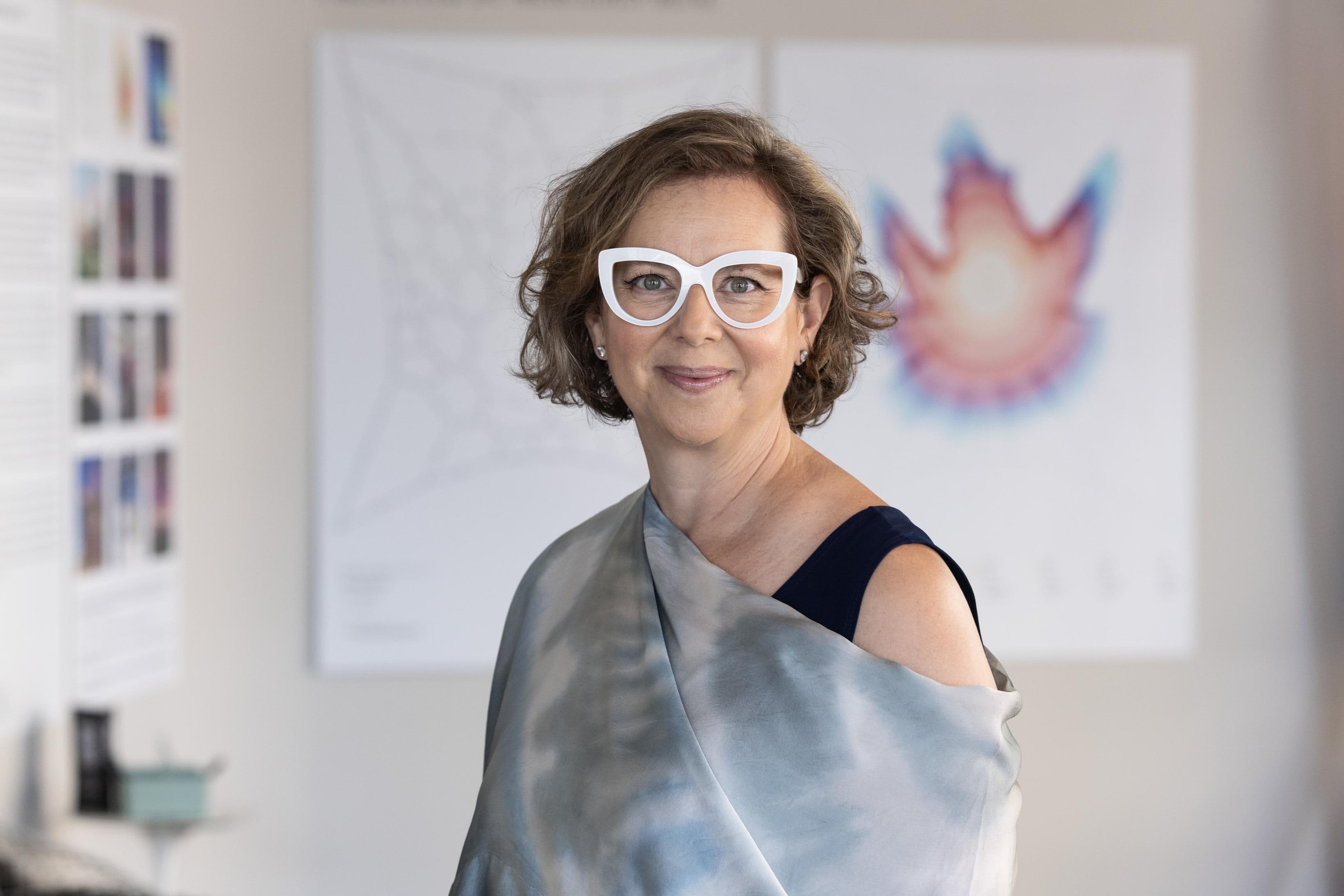 ©RoseBrothers
Interview with Janet Echelmann:
Question: How do you feel about being part of World Design Capital Frankfurt Rhine-Main 2026? And how does this project, ‘A Sky Full of Hope’ at Konstablerwache, fit into your global vision of design as a democratic and unifying medium?
Janet Echelman: It is an honour to be part of the World Design Capital Frankfurt programme. My approach to public space is to draw the eye upwards to the sky and let nature be the animating force of my work. It is constantly changing and more interesting than any pattern I could design. And this work, which I am designing for the ‘Konsti’ (Konstablerwache), consists of several interwoven strands of colour that move in harmony with nature. So that seems to fit very well with the theme ‘Design for Democracy. Atmospheres for a Better Life.’
Question: Your works transform places like Konstablerwache into living sculptures that are constantly changing with the light, wind and people. How should Frankfurt's urban society use and appropriate this new atmospheric and social reference point in everyday life?
Janet Echelman: My work is an invitation to each individual to create meaning from their experience. I never give fixed instructions or meanings, because each person completes the artwork through their own process of interpretation. And as far as the Konstablerwache is concerned, I am very excited to see how people will use the public space in their own way – whether for music, dance, parties, yoga meetings, drumming, just hanging out or whatever. Who knows what will come of it? The most exciting part for me is that I don't know. I like to hand over control to nature and to the citizens of Frankfurt. They will determine it; it is their sculpture. They will decide how they want to use the space.
Question: ‘A Sky Full of Hope’ refers to the 178 nations living in Frankfurt and stands for openness, diversity and international solidarity. How do you translate these abstract values into the materiality, colourfulness and design language of the net, and how will passers-by recognise these messages?
Janet Echelman: The way I translate ideas into visual forms is important for the development, but passers-by may not be aware of these abstract concepts embedded in the work. That's perfectly fine. If they are interested, they can go online, read about it and discover it. I like that you get a gift for your efforts when you immerse yourself in something.
Question: Konstablerwache is considered one of the busiest and most polarising places in the city centre, characterised by transit, friction and differing interests. What role do you think art in public spaces can play here? Should the installation calm conflicts, make them visible or open up a new framework in which urban society can discuss future coexistence and design?
Janet Echelman: I hope that this new sculpture will create an atmosphere of harmony and enliven everyone's daily life with colour, light and movement. Perhaps new opportunities will arise in this environment.
Question: Your career began with a chance observation of fishermen in India knotting their nets. Today, you use high-tech software and fibres from the aerospace industry. How much of that original craftsmanship intuition is still present today, given the highly complex digital planning involved in the Frankfurt project?
Janet Echelman: That's a very good question. Certainly, there was a different rhythm for deciding aesthetic questions in the moment when I was still making my first works entirely by hand. Now, to create something on the scale of a public space like the Konsti with intense technical challenges requires intensive planning. I have to adhere to construction documents that we create and that are checked by the city for safety, for example. So some things are sacrificed, such as the spontaneity of the creative process. But I believe that the spontaneity of the aesthetics remains. I like the result of this equation, because the opportunity to share the work on a city scale – at a height that hovers above all our heads, whether it's market day or a normal day – this expansion of scale broadens the potential of what art can be. Of course, I sacrifice some of the spontaneity of craftsmanship, but I think the overall result is worth it.
Question: Many people in Frankfurt will see your work as they rush to work or go shopping. What is the nicest compliment that a normal passer-by – not an art expert – has ever given you about one of your sculptures, and what do you hope for the people at Konstablerwache?
Janet Echelman: The best compliment anyone can give me is when they think about it and develop their own ideas. When my work opened in Sydney, Australia, it was located directly above the exit of the underground station. People came out of the underground and were shocked or surprised to see the world in a new way. There was a man walking down the street with a shopping trolley; it was clear that he was homeless and had all his belongings in that trolley. He didn't know that I was the artist, and he started talking to me about it. He asked, ‘What is that?’ and said, ‘I think it's a bird.’ That interaction – first of all, that he felt entitled to develop his own ideas and think about them – that was the biggest compliment.