 ©Bea Engelmann
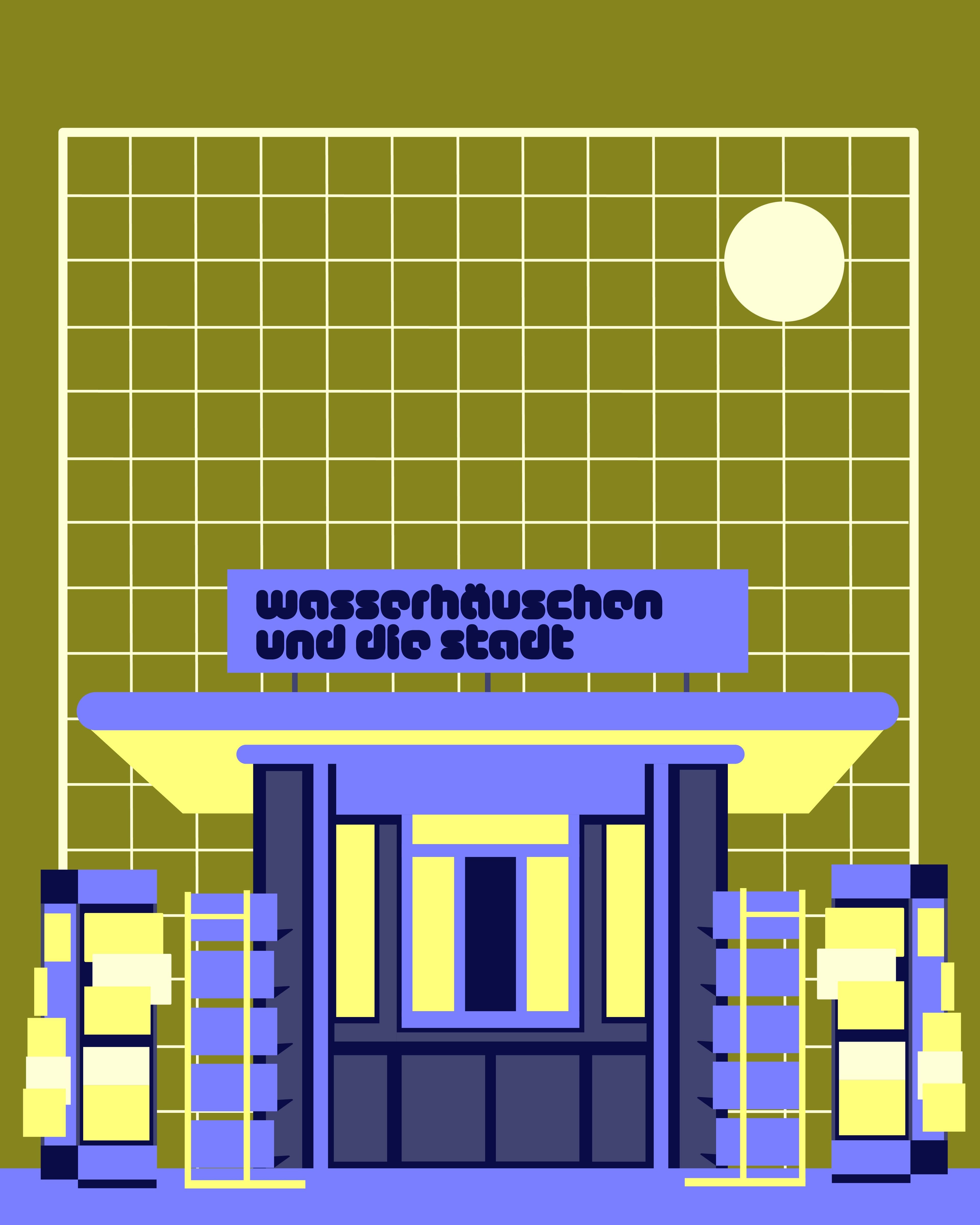
Wasserhäuschen und die Stadt
Engelmann Gerules Riechardt GbR
Originating as a typology for local services in Frankfurt in the 1870s, the “Wasserhäuschen” has today grown far beyond its original function. They are a social hub, living archive and space for community dialogue. A true Frankfurt institution. We want to explore this complexity: What can we learn from the “Wasserhäuschen” about urban spaces, care, and community?
As an interdisciplinary project group we approach the topic through methods from both academia and design, while maintaining close collaboration with local experts, such as journalist and art photographer Hubert Gloss. The approach combines qualitative observation, exploratory field research, historical reconstruction, and creative interpretation. The focus lies on three key areas:
- 01 Gebabbelt (learning)– Getting to know the existing situation and building on current knowledge
- 02 Hingeguggt (mapping) – Developing methods and setting focus areas
- 03 Uffgebasst (developing) – Exhibiting, discussing, and sustainably integrating the results into the urban fabric
The co-productive process and the collective outcome are intended to reflect the complexity of the subject: much like the assortment found in the neighborhood kiosk bag, the result is a diverse collection of texts, photographs, films, maps, conversations, objects, and art that together form a multifaceted portrait of the “Wasserhäuschen”. We want to appreciate the identity of Wasserhäuschen and thus contribute to the preservation and further development of this Frankfurt architectural heritage—as spaces for encounter, negotiation, and care in everyday urban life.
The results will be presented as part of “Wasserhäusje Day” on September 12, 2026, in Frankfurt. Come by and put together your own “Gemischte Tüte” (mixed bag)!
The project was initiated by Hannah Gerules, Bea Engelmann, and Carla Riechardt. The three met while studying architecture in Darmstadt and now work in different cities, each with their own areas of focus. In their professional practice, they explore issues of care in an urban context as well as the role of third places. The project group, consisting of individuals with backgrounds in the arts and sciences collaborates with local stakeholders.