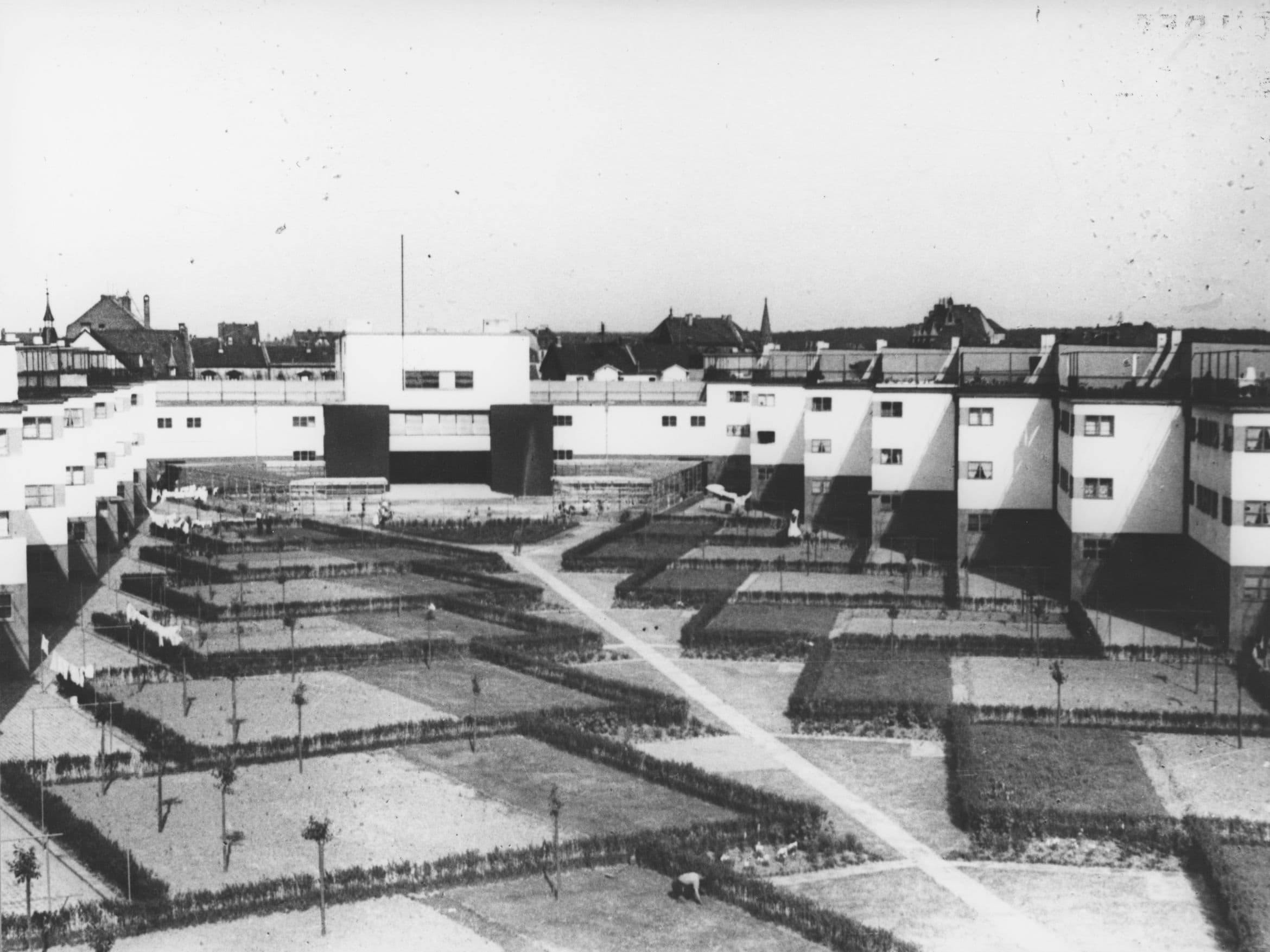
 ©Institut für Stadtgeschichte
Museum Angewandte Kunst, Frankfurt
Was war das Neue Frankfurt? Kernfragen zum kommunalen Bauprogramm der 1920er Jahre
January 2026
Museum Angewandte Kunst Frankfurt am Main
...
In the years after the First World War, Frankfurt was characterized by a strongly socially and culturally oriented municipal administration as well as a broad civic engagement and both had an impact on the entire living space. In particular, the achievements of the Lord Mayor Ludwig Landmann and the City Planning Officer Ernst May as well as the employees of the Building Department such as Martin Elsaesser, Adolf Meyer, Ferdinand Kramer or Margarete Schütte-Lihotzky are often at the center of attention.
Numerous housing and industrial construction projects were successfully implemented: the housing estates Römerstadt (1927-28), Praunheim (1926-30), Bornheimer Hang (1926-30) and Westhausen (1929-32) are just a few examples of the housing developments that created around 12,000 apartments for the Frankfurt population within the space of just 5 years. Numerous municipal school buildings and a retirement home run by the Henry und Emma-Budge-Stiftung as well as industrial facilities such as the power station and the Großmarkthalle are also among the buildings that were to establish Frankfurt’s reputation as a modern metropolis. In addition, the design of public green spaces and sports facilities was also a priority and realized from the beginning.
Most of the residential buildings and estates as well as numerous public buildings of The New Frankfurt are still functional and visible, used, inhabited and utilized today. On the other hand, public knowledge about the achievements of this building program is still little known outside the specialist fields of architectural and design history. The exhibition aims to change this: The aim is, on the one hand, to establish a broader awareness of the historical planning and, on the other, to carry questions of city life and housing from a present-day viewpoint into the future.
The exhibition consists of a multimedia room in which the key questions regarding the building program are posed and answered, as well as taking a closer look at where its’ initiatives, people and fields of action are presented in the context of the 100th anniversary. The multimedia room assembles significant objects from the time of The New Frankfurt, texts and original quotes, images, films, infographics and photographs that come together to tell the story of what The New Frankfurt was and will continue to be.
The questions formulated in this initial room pave the way for more in-depth exhibitions in other parts of the museum, with partner institutions and in the Rhine-Main region; and ultimately extend into the program of World Design Capital Frankfurt RheinMain 2026, thus providing an updated perspective on The New Frankfurt and other national and international design movements that have always led to changes in societal models.
Curator: Grit Weber
As a vibrant place of discovery, the Museum Angewandte Kunst endeavours to keep its finger on the pulse of currents and developments in society, with a special emphasis on design and fashion.
Against the background of its prominent collections of outstanding works of applied art, it strives to shed light on the obscure and create relationships between the events and stories revolving around things of the concluded past, the emerging present and the immanent future. The changing exhibitions tell of cultural values and evolving life circumstances given shape and expression with new forms.
With its new presentation formats, the Museum Angewandte Kunst distances itself from the traditional criteria for museological collection and organization dating from the nineteenth century. The approach to the museum’s exhibits solely from the perspective of their history has made way for the negotiation of timely and untimely reflections. This leads in turn to the emergence of issues encountered in thematic exhibitions with ever new object constellations.
The presentation Elementary Parts: From the Collections opened in 2014 is a core component of this endeavour. For this “heart chamber of the museum”, objects are selected from the many areas of the collection, regions of the world and eras of the past, and placed side by side in all their dissimilarity. In this way the Museum Angewandte Kunst shows its potential and exposes both the history of its holdings and the point of departure for curatorial praxis.