WDC-Hub
The Half Time Show – Die Halbzeitshow
WDC 2026
...
The exhibition The Half Time Show – Die Halbzeitshow at the WDC Hub brings together selected projects from the first half of the year. By mid-August, approximately 1,400 events had taken place as part of WDC 2026.
These include the WDC 2026’s own formats as well as projects from the Open Call, which invited individuals, associations, institutions, businesses, and universities from across the entire RheinMain region to contribute their design ideas. The exhibition offers an insight into the diverse WDC programme and demonstrates the enormous commitment with which people are helping to shape their region.
In true half-time show fashion, we are keeping things brief: each project is represented by a single image, with further information available via the QR codes. The exhibition itself is designed as an open format; during the second half of the year, additional projects will be added as it gradually expands.
 ©Ben Kuhlmann
WDC-Pavillon
WDC 2026, Constructlab
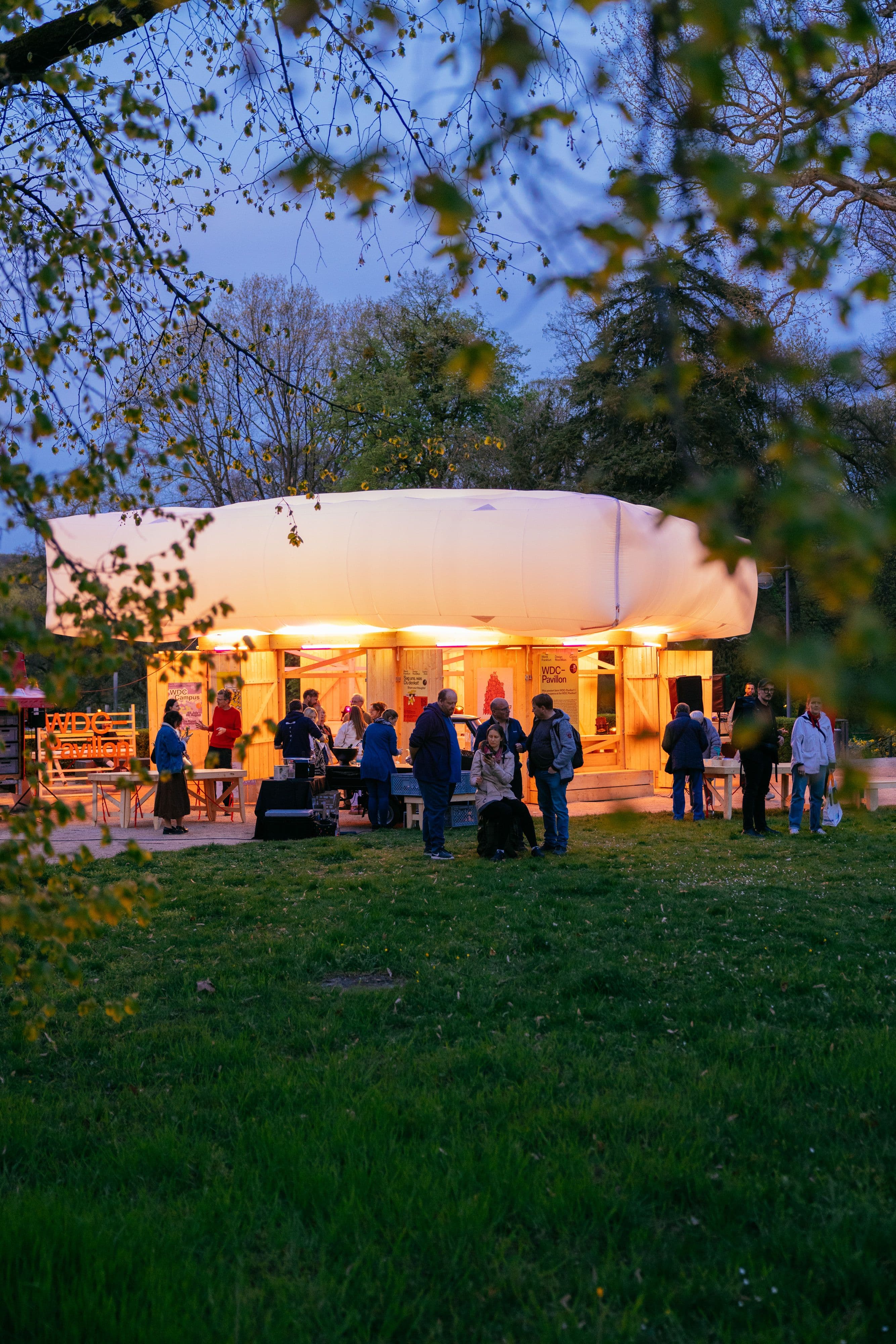
Since April 2026, the WDC Pavilion, designed by Constructlab, has been touring the Frankfurt Rhine-Main region. Until the end of September, it will be stopping in six towns and municipalities – Bad Homburg, Kelkheim, Offenbach, Wiesbaden, Rheingau and Darmstadt. The programme is being developed in collaboration with local initiatives, institutions and WDC partners. It combines workshops, educational and outreach activities with open formats that invites participation and spontaneous dialogue.
%2520(1).jpg&w=3840&q=75) ©Anna Kirchner
©Anna KirchnerDemokratieKioske
with Young Urban Future Labs – für mehr demokratische Mitgestaltung in Frankfurt/Rhein-Main und Lust auf besser leben gGmbH
Kiosks and Wasserhäusschen are public spaces where local residents can meet informally. DemokratieKioske uses 11 kiosks in the Rhine-Main region to host artistic initiatives. These include the digital ‘Gute Frage’ tool, which invites everyone to contribute ideas on democratic issues.
 ©Monika Keiler
Kiosk of Solidarity X Bahnhofsviertel
Moritz Ahlert, Felix Egle
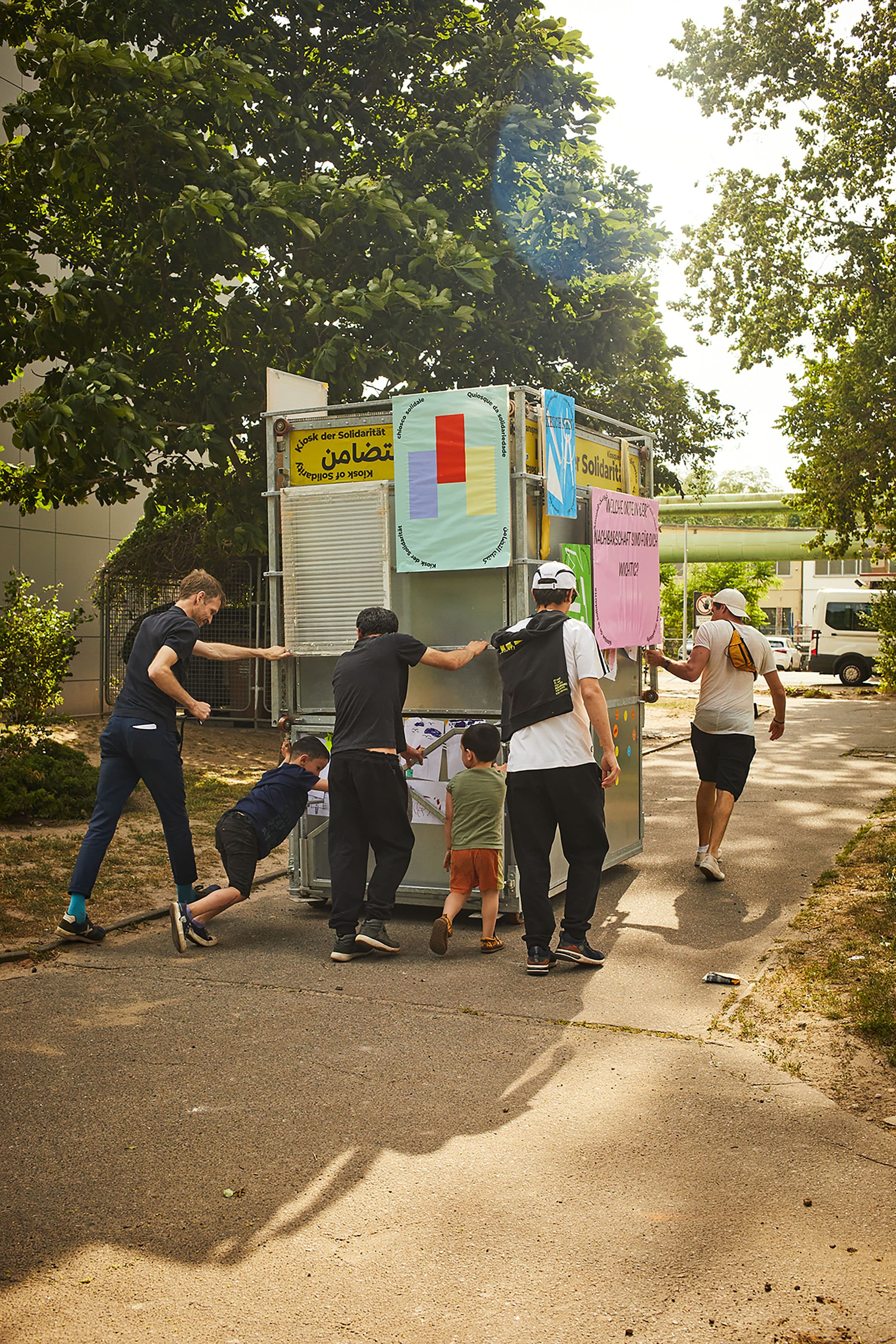
The Kiosk of Solidarity takes action at various locations in Frankfurt’s railway station district and creates a platform for dialogue, interaction and knowledge exchange. In collaboration with local residents, neighbourhood initiatives and groups, street social workers, addiction support services and people affected by addiction, perspectives on urban space and drug use are gathered and translated into, for example, poster campaigns.
 ©Klaus Winkler
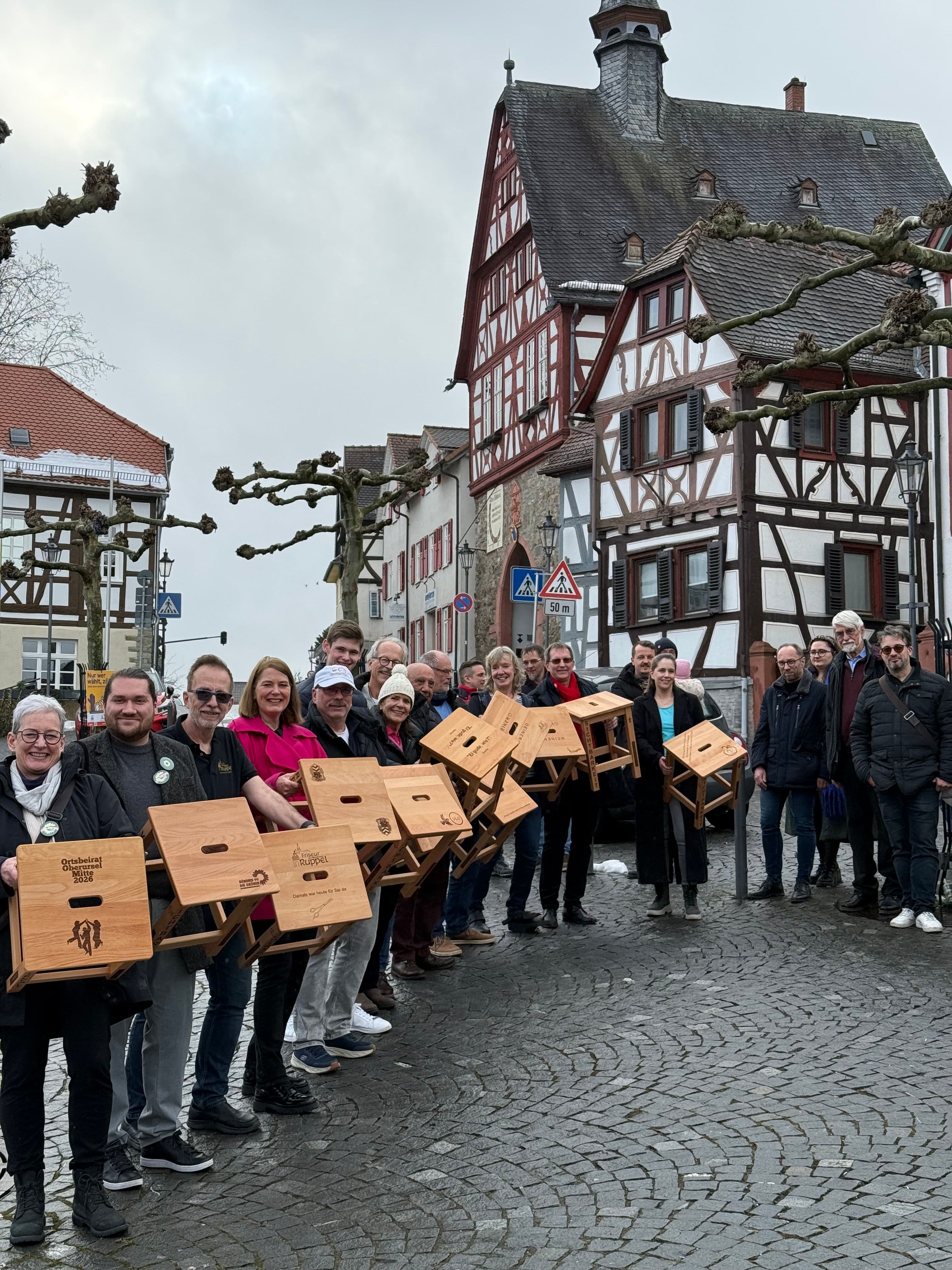
Marktplatz Oberursel: Lebendig, offen, mittendrin!
Initiative „Marktplatz Oberursel: lebendig, offen, mittendrin!“
The full potential of the market square in Oberursel has so far remained untapped. The project Marktplatz Oberursel: lebendig, offen, mittendrin! aims to change that: it raises visibility for existing initiatives, brings people together and forms new connections in everyday life. The market square is evolving into an open meeting place for a vibrant, democratic urban community.
 ©Mafalda Rakos
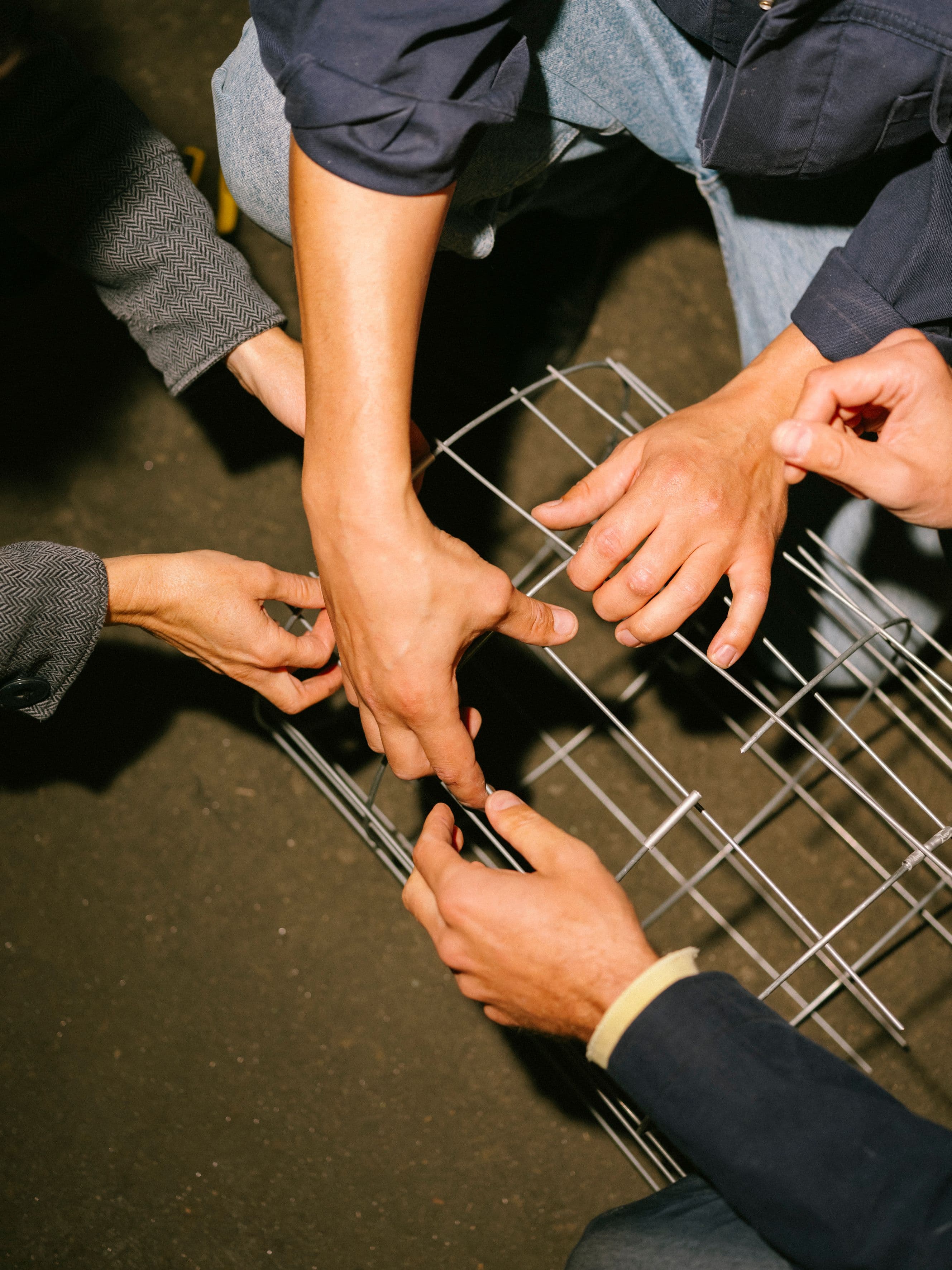
Co-designing ada_kantine
studio formagora
As part of a participatory co-design process, studio formagora is planning and building a new, functional reception area as well as thoughtfully designed furniture for the guests of the ada_kantine – made largely from recycled materials.
 ©Ben Kuhlmann
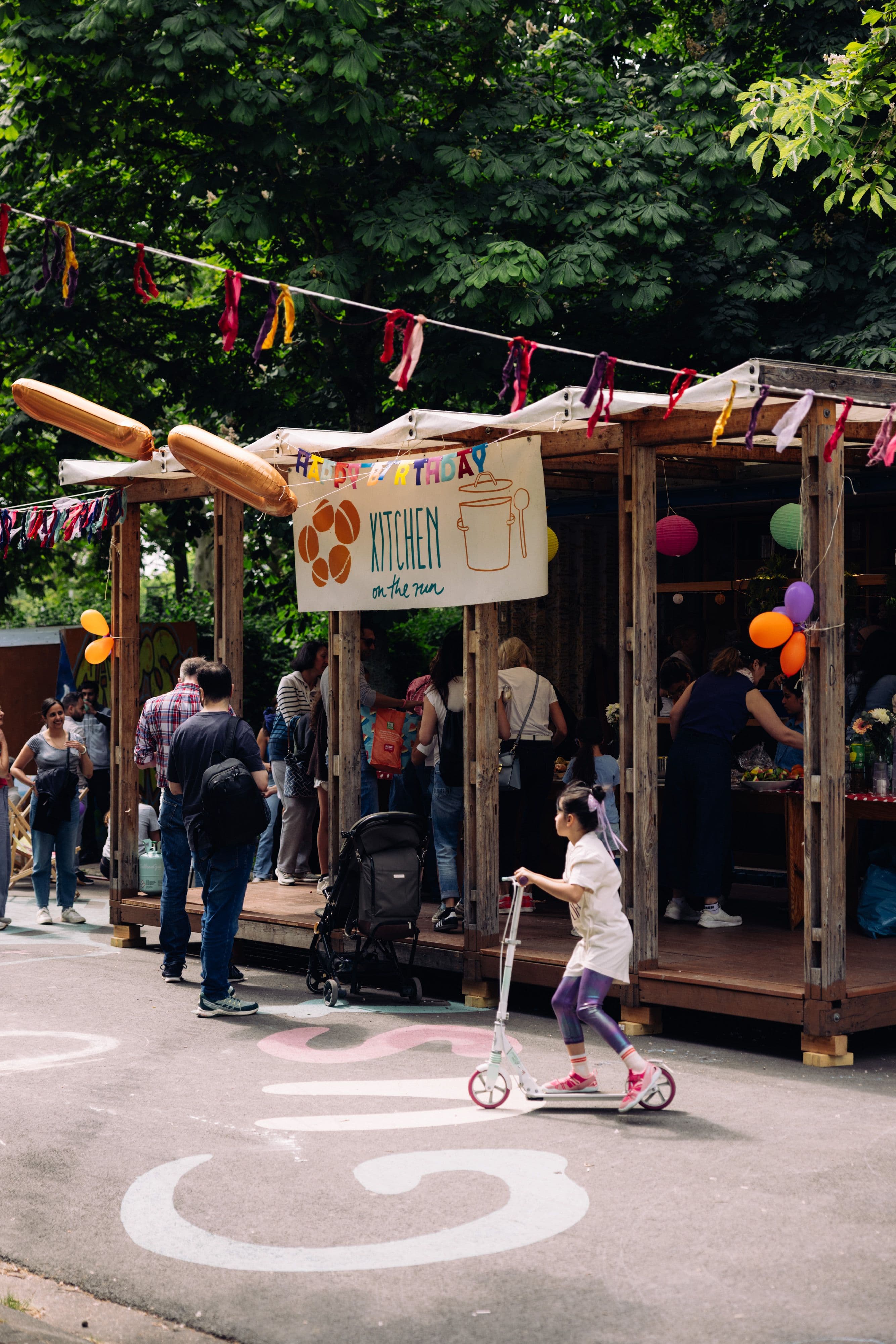
Kitchen on the Run
Über den Tellerrand Frankfurt e. V.
Kitchen on the Run is the travelling version of Über den Tellerrand: a kitchen housed in a shipping container, which will be based on Gustavsburgstraße in the Gallus district for eight weeks. Outdoor cooking events and other social activities will take place there, promoting intercultural exchange.
 ©Diana Djeddi
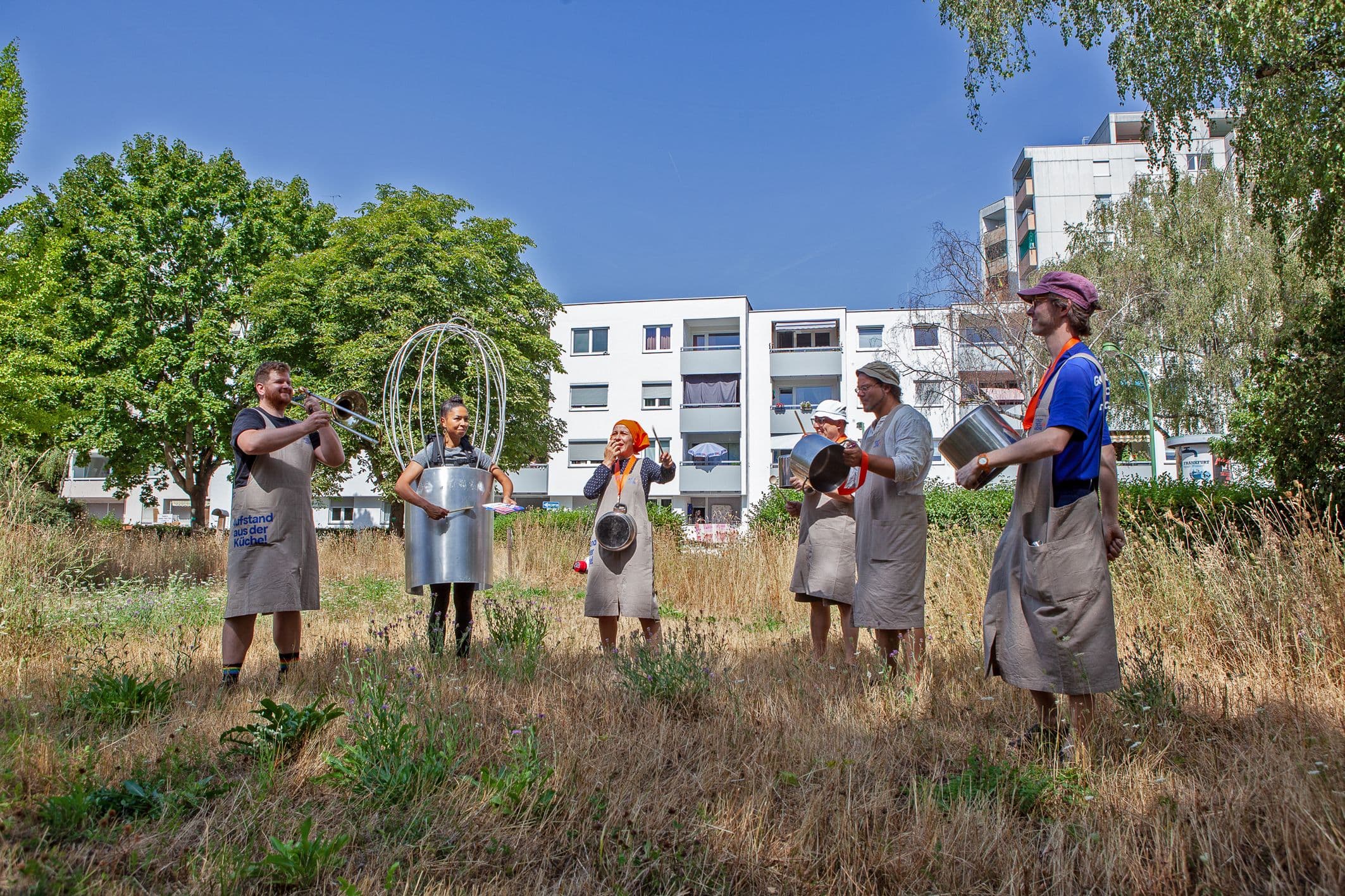
Trad is a trap. Für eine neue Frankfurter Stadtteilküche
andpartnersincrime
Over several weeks, people in the historic working-class neighbourhood of Riederwald will cook, eat, discuss and rehearse together. A claim becomes a living utopia: #ÖNVP – Public local catering for all!
 ©Ben Kuhlmann
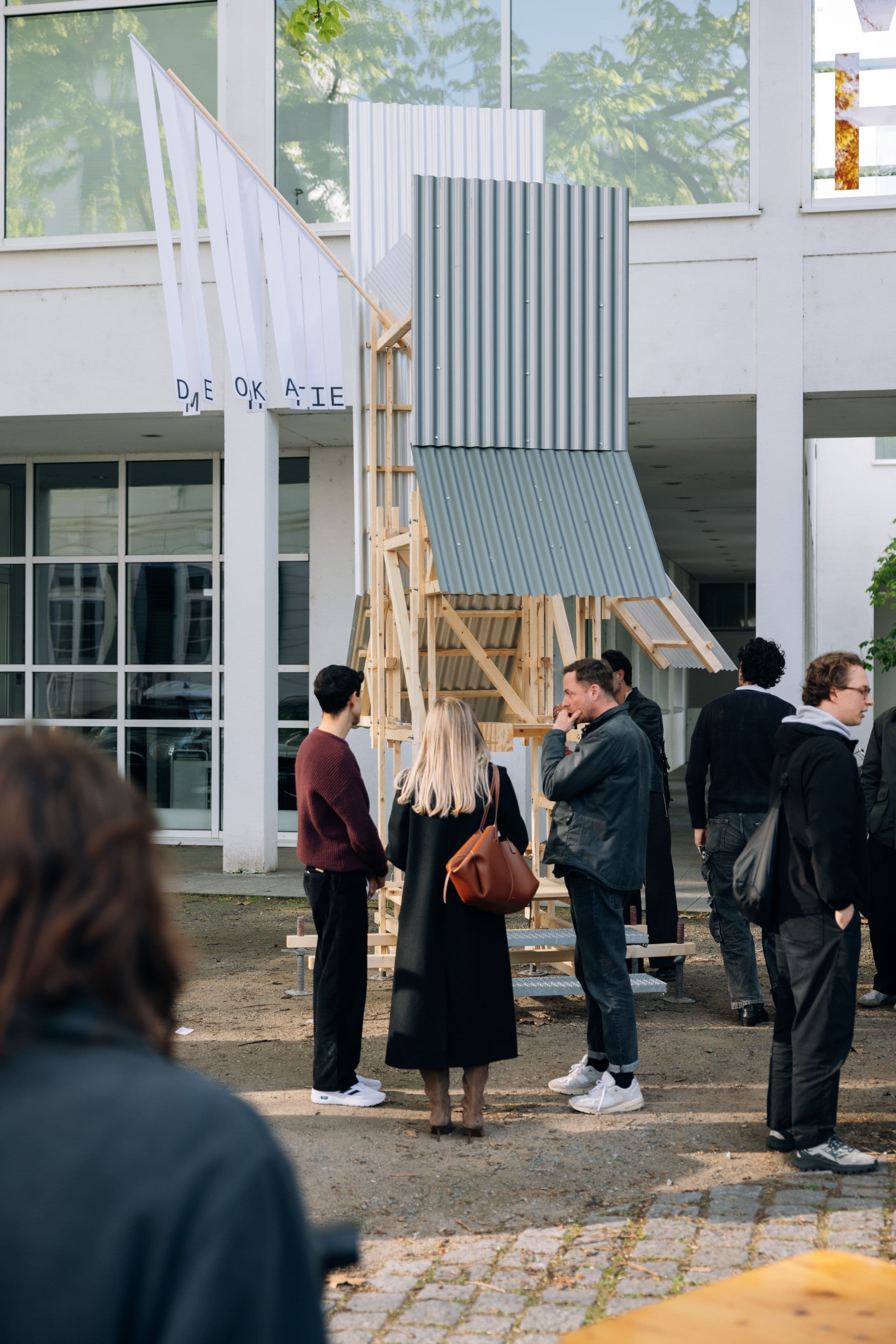
Alle haben die Wahl
Frankfurt University of Applied Sciences
In the ‘Design for Democracy’ voting booth, designed by students at Frankfurt University of Applied Sciences, the motto is: EVERYONE has a say. Whether old or young, whether you’ve been in Germany for three days or your whole life, your vote counts.
 ©Ben Kuhlmann
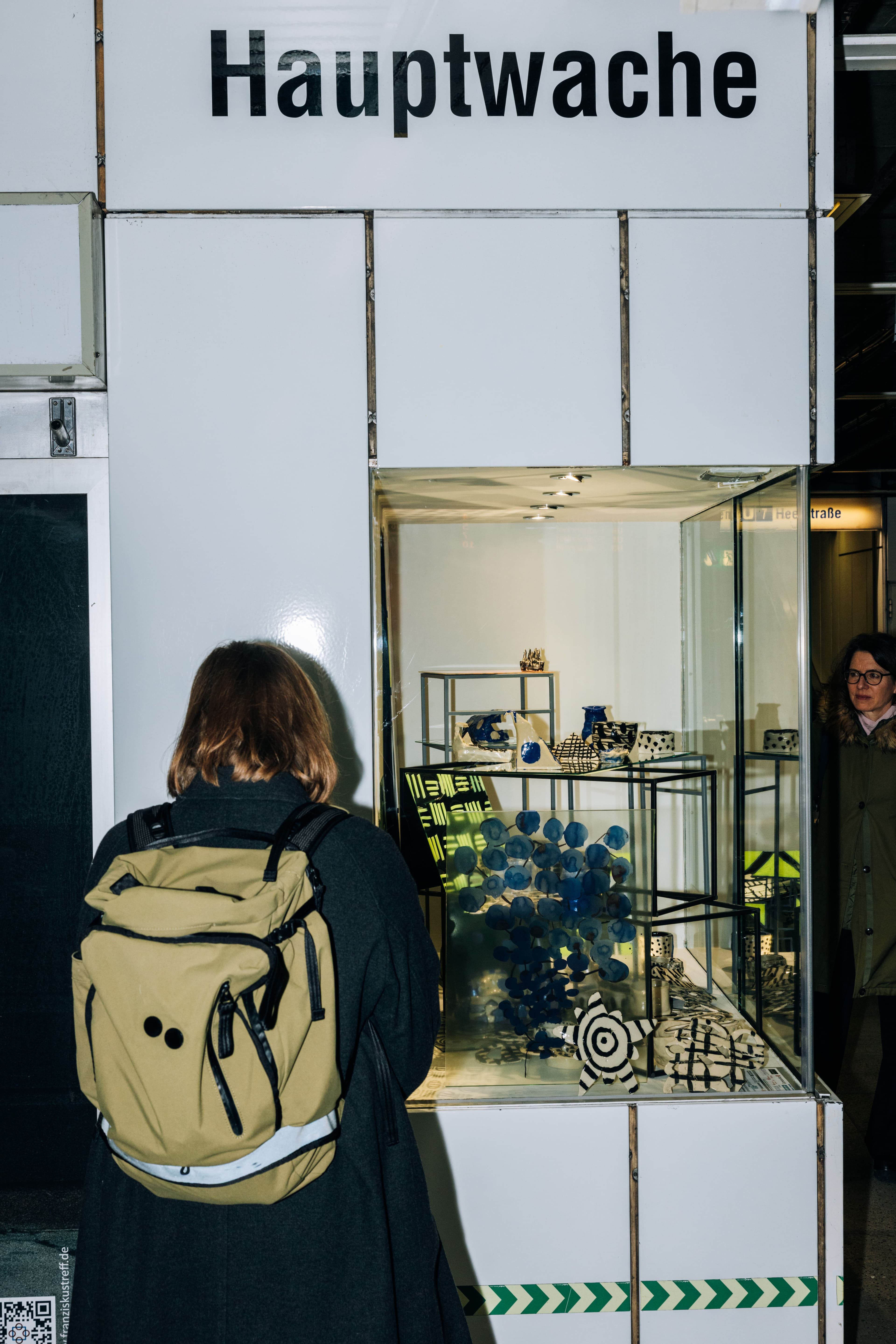
Kunststation Hauptwache
Petra Stilper von Domäne S – für Schülerinnen und Schüler e. V., Adriane Westerbarkey, Schulen aus Frankfurt und Offenbach, Stadt Frankfurt am Main, Stadtplanungsamt, Museum für Angewandte Kunst, Frankfurt, Deutsches Architekturmuseum, Verkehrsgesellschaft Frankfurt am Main, BDK Hessen (Fachverband für Kunstpädagogik), Mitte Frankfurt
The Kunststation Hauptwache project transforms empty display cases at the Hauptwache underground station into a public exhibition space for art created by school kids. The aim is to offer young people a visible platform in the heart of Frankfurt and to encourage them to explore themes such as the environment, sustainability and urban design through art.
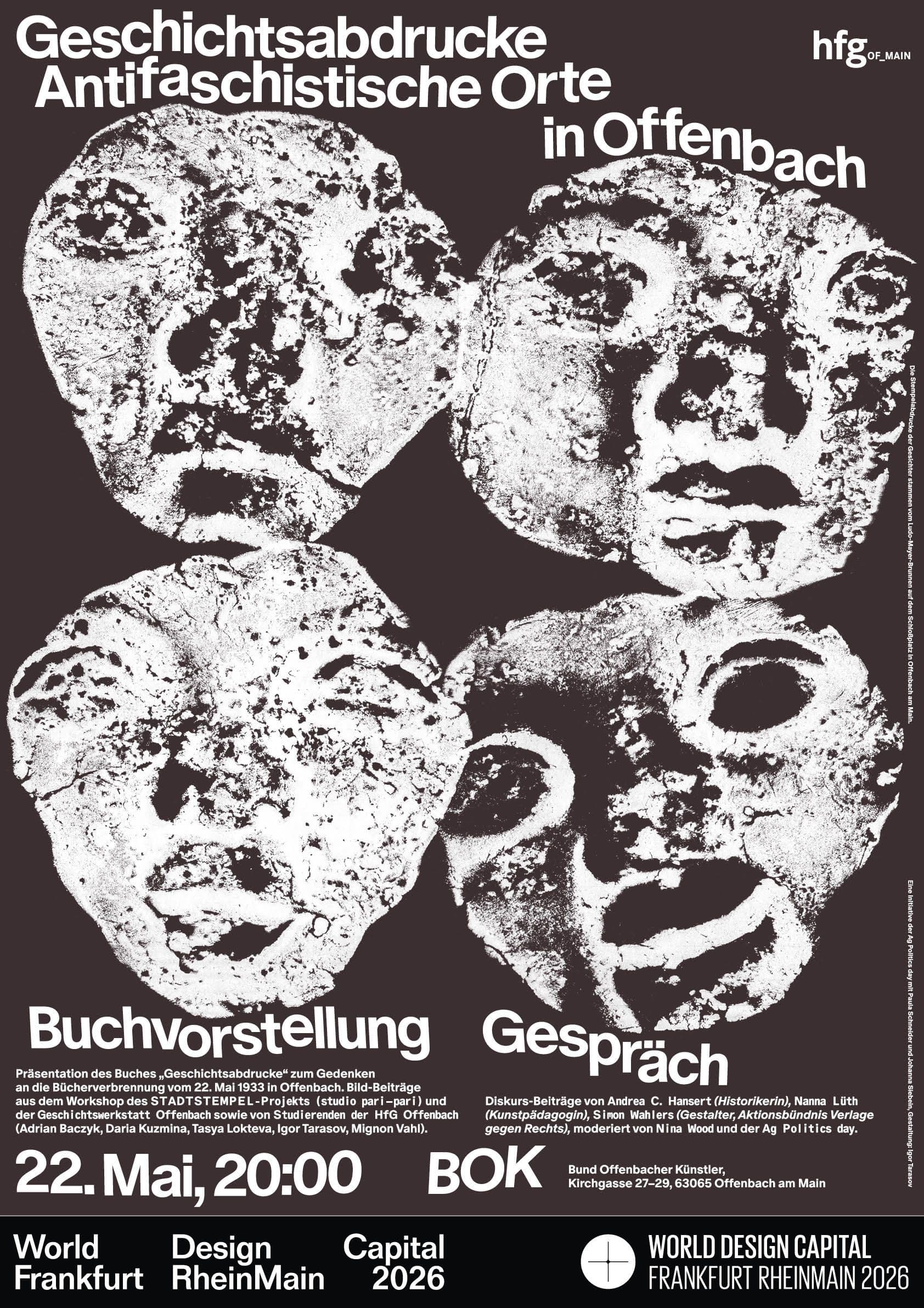
Geschichtsabdrucke: Antifaschistische Orte in Offenbach
HfG Offenbach, studio pari–pari (Marina Kampka und Lena Schrieb), Geschichtswerkstatt Offenbach
On 22 May 1933, a public burning of books organised by the National Socialists took place on Schlossplatz in Offenbach – with the support of pupils and teachers from the former institution that preceded the HfG Offenbach. The ‘Politics Day’ working group at the HfG commemorates this event and organises anti-fascist city tours in collaboration with studio pari–pari.
 ©Ben Kuhlmann
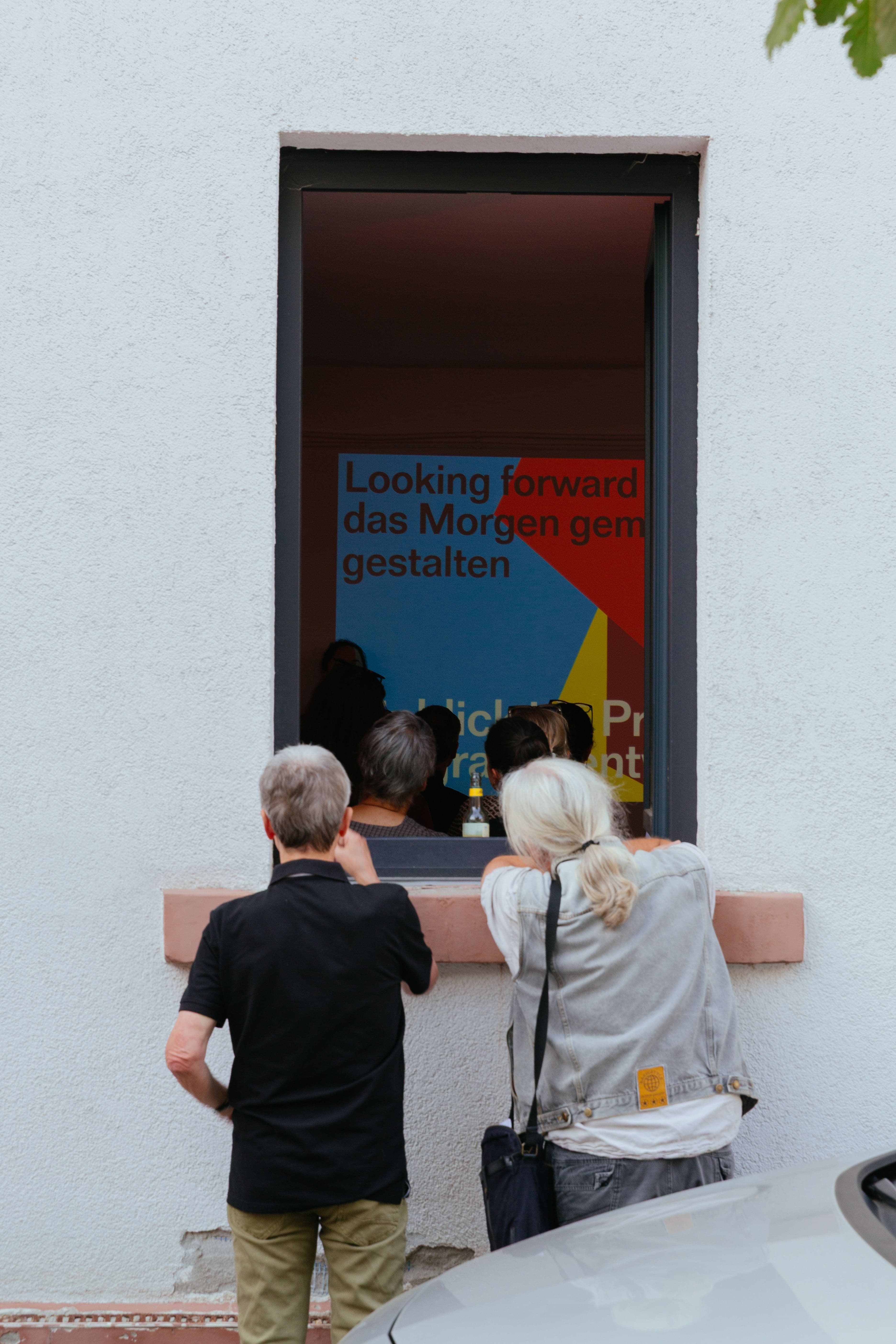
WDC-Stammtisch
The WDC Stammtisch offers a space for relaxed discussion and networking within the WDC 2026 programme-makers’ network: held regularly, at different venues each time, and free to attend for everyone.
 ©Ben Kuhlmann
Main-Light: Klimaneutrale, umweltgerechte Beleuchtung für den öffentlichen Raum in Hessen
Tobias Trübenbacher, Andreas Lang
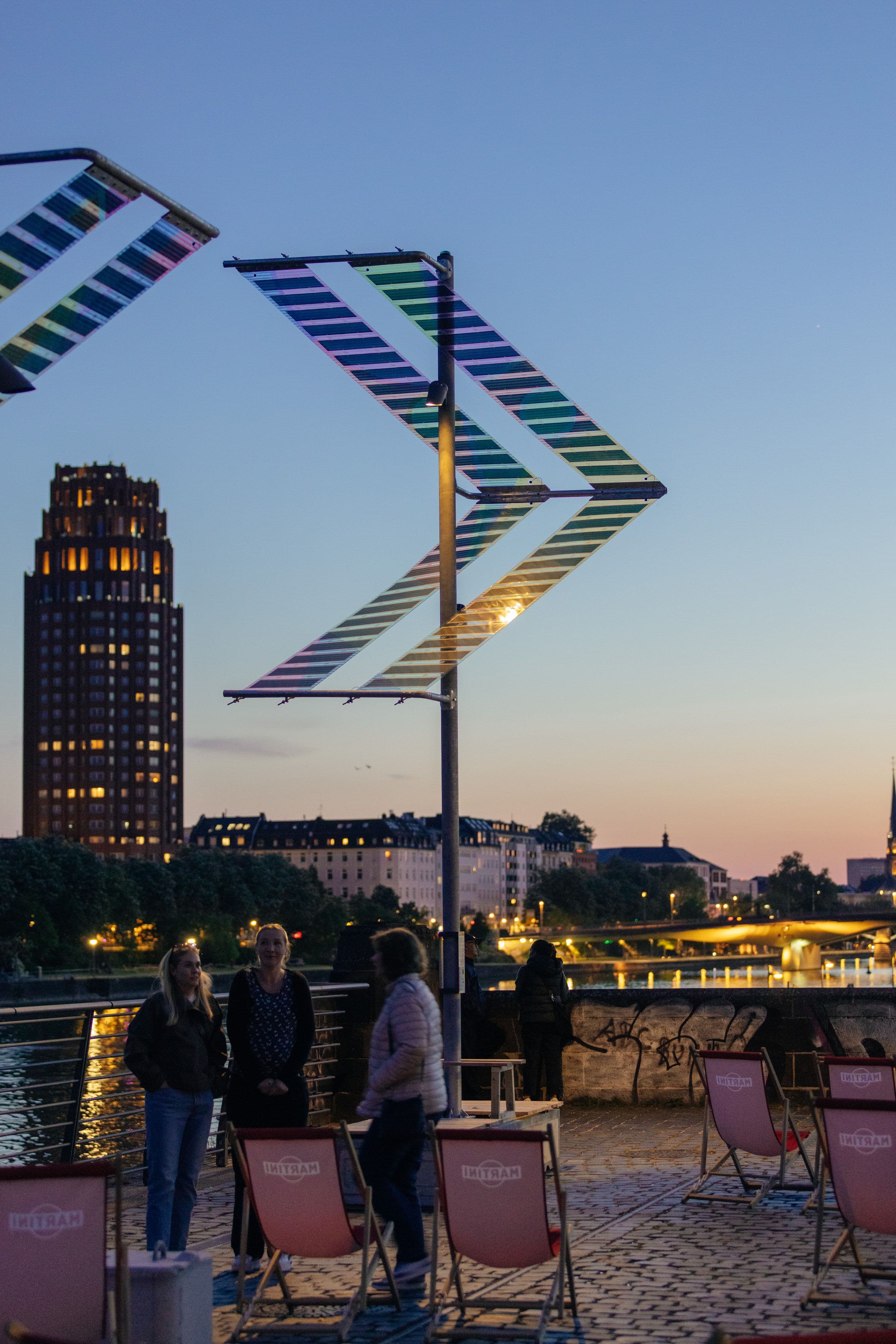
Main-Light is a solar-powered light installation for public spaces. It generates electricity using innovative solar films, reduces light pollution, brings renewable energy production to life – and brings light to places that were previously dark.
 ©Ben Kuhlmann
MFA – Material für Alle
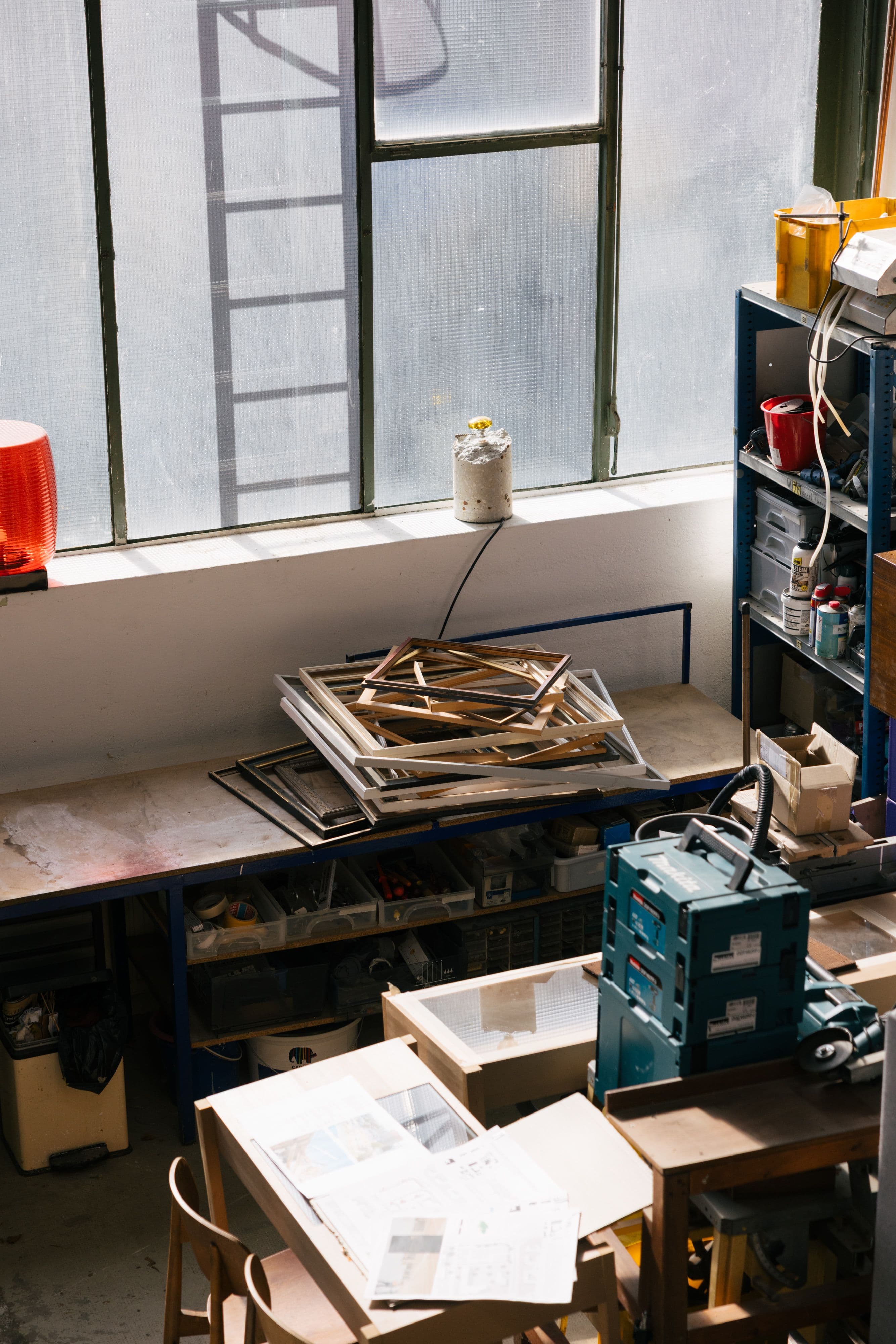
Since 2019, MFA has been the central platform in the Frankfurt Rhine-Main region for giving materials from the arts and culture scene a second life. MFA passes on materials for up to half their original price, effectively saving them from being thrown away.
 ©HMLEU_raumgesichte
What is it made of? Zutaten für Gesundes Bauen
Leila Behjat (Healthy Materials Lab EU), Silke Remmel (Raumgesichte)
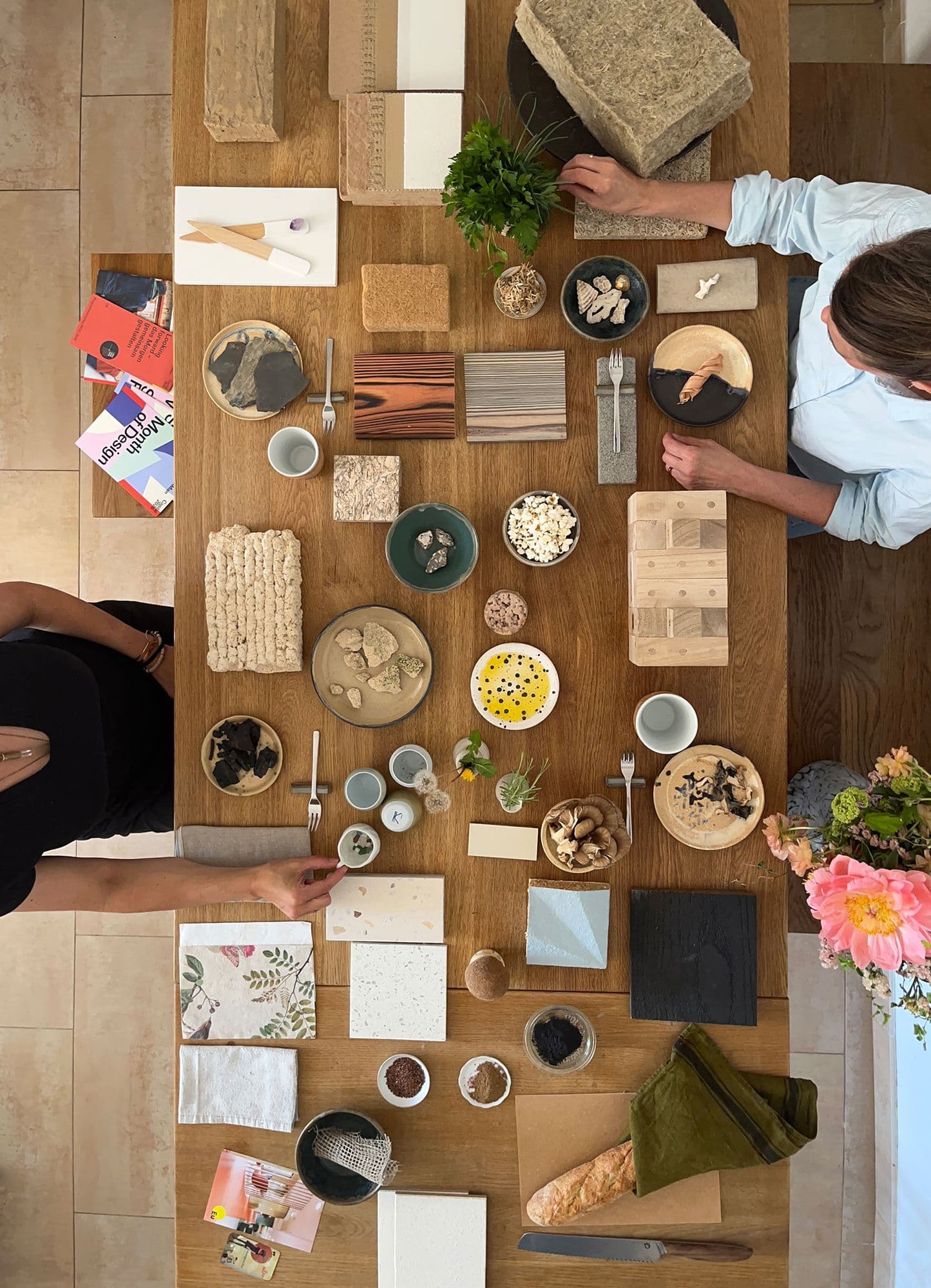
Experience healthy building materials first-hand and learn about the links between housing, neighbourhoods, the circular economy and the health of people and the planet during a ‘round-table discussion’. An exhibition format designed for discovery and discussion.
 ©Ben Kuhlmann
CARLO – Frisches Stadtgrün am Bockenheimer Depot
OMC°C, Just Architekten, Optigrün International AG
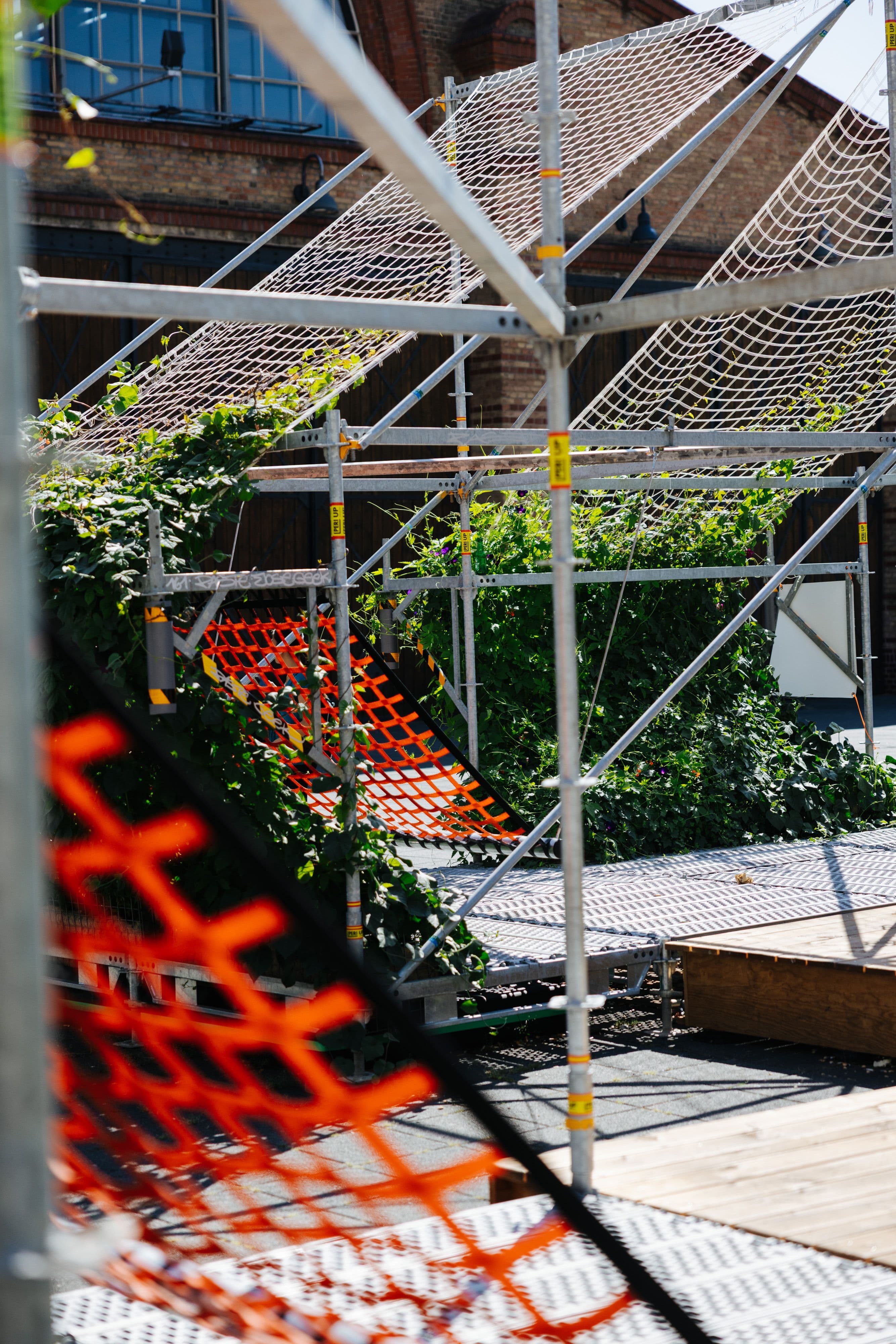
Thanks to the CARLO project, Carlo-Schmid-Platz at the Bockenheimer Depot is being transformed into a green oasis this summer. In one of Frankfurt’s hottest spots, a temporary green installation is taking shape, combining innovative climate architecture with a social meeting place.
 ©Lea Kulens
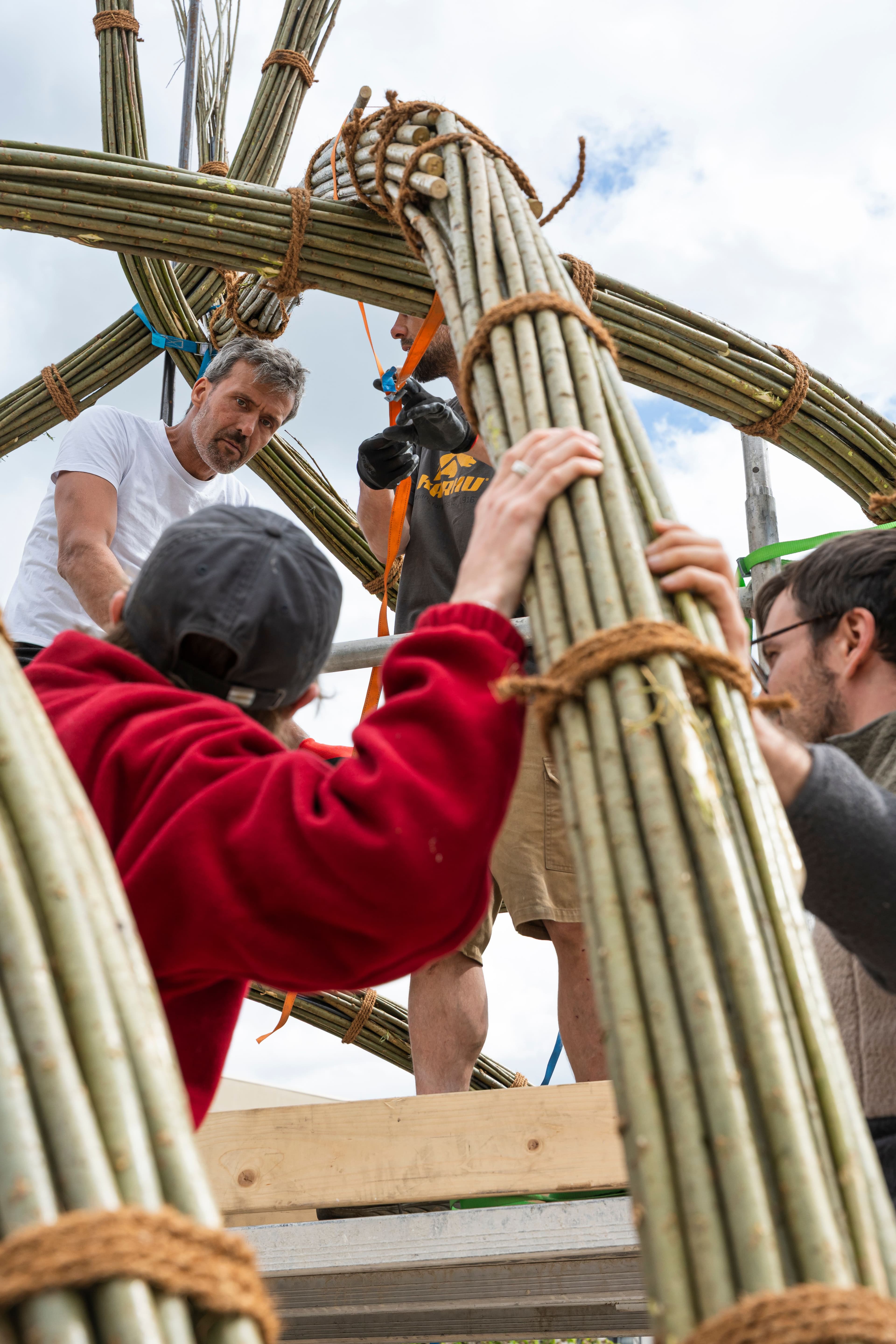
Weidenpavillon im Senefelder Park
hada – Werkstatt für Gemeinwohl
Together with Offenbach citizens, the artists’ collective hada – Workshop for the Common Good – is creating a shade-providing willow pavilion in Senefelder Park. The pavilion protects an otherwise unplanted section of the park from the heat, ensuring it can be used even in the height of summer.
 ©Ben Kuhlmann
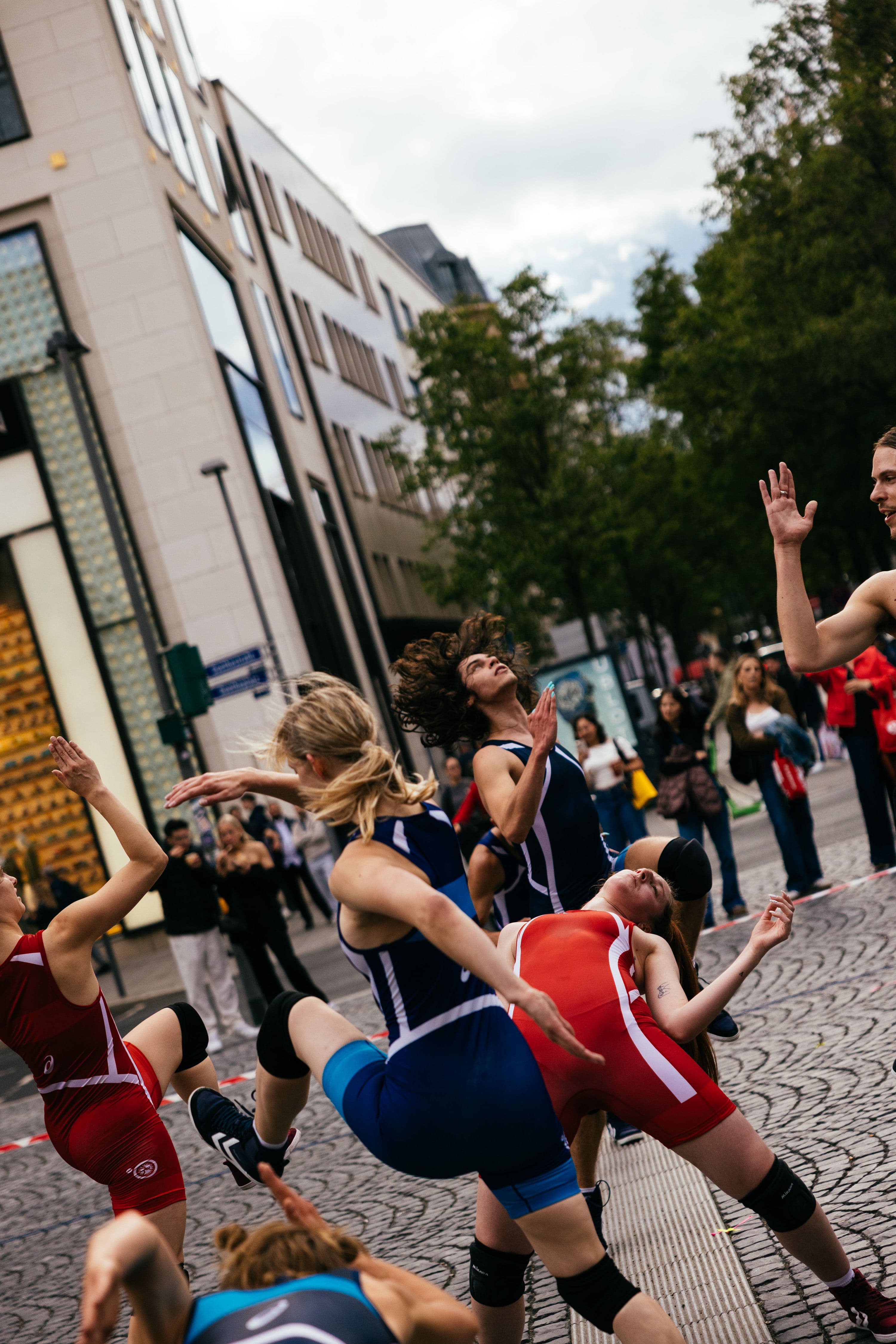
BEAT BY BITS – An Open-Air Version of 16Bit
Paula Rosolen / Haptic Hide
BEAT BY BITS (BBB) is a dance performance taking place in a public space in Frankfurt. The piece explores the social, cultural and political dimensions of techno and brings them to life for everyone through a dynamic interplay of sound, colour and movement.
 ©Felix Grünschloß
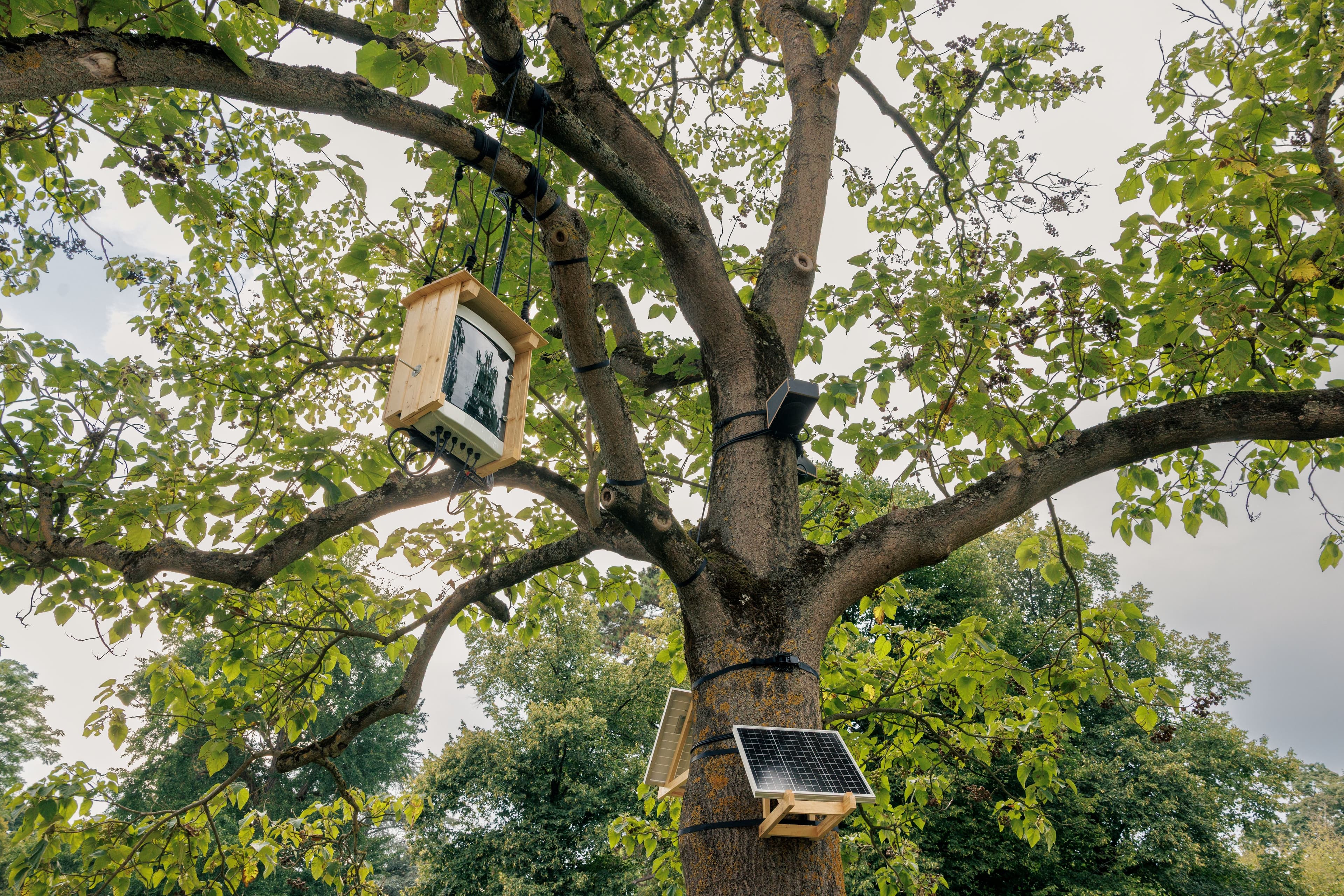
Radical Climate Action Bird
Dennis Siering
Dennis Siering uses AI, bioacoustics and ornithology to translate anti-fascist protest songs into artificial bird songs. Played in public spaces, these cross-species forms of communication are being tested and offer a critical perspective on the rise of neo-fascist ideologies.
 ©Ben Kuhlmann
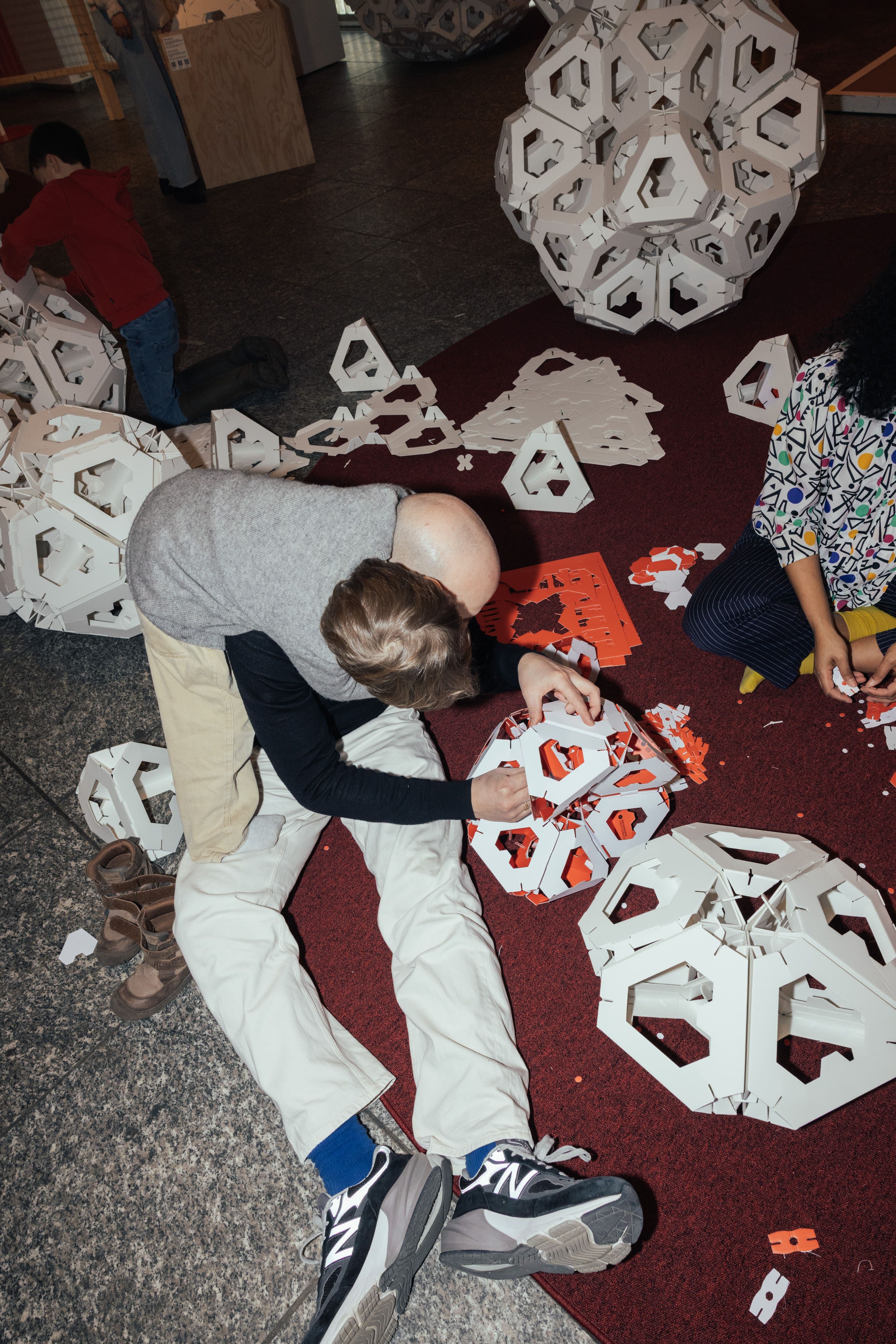
Collective Paper Aesthetics zu Gast im WDC-Hub
Noa Haim
Collective Paper Aesthetics creates and develops materials for public engagement using pop-up architecture and custom-designed furniture. The Rotterdam-based studio designs immersive placemaking experiences that combine mathematical expertise, practical engineering knowledge and principles of universal design.
 ©Karsten Piper
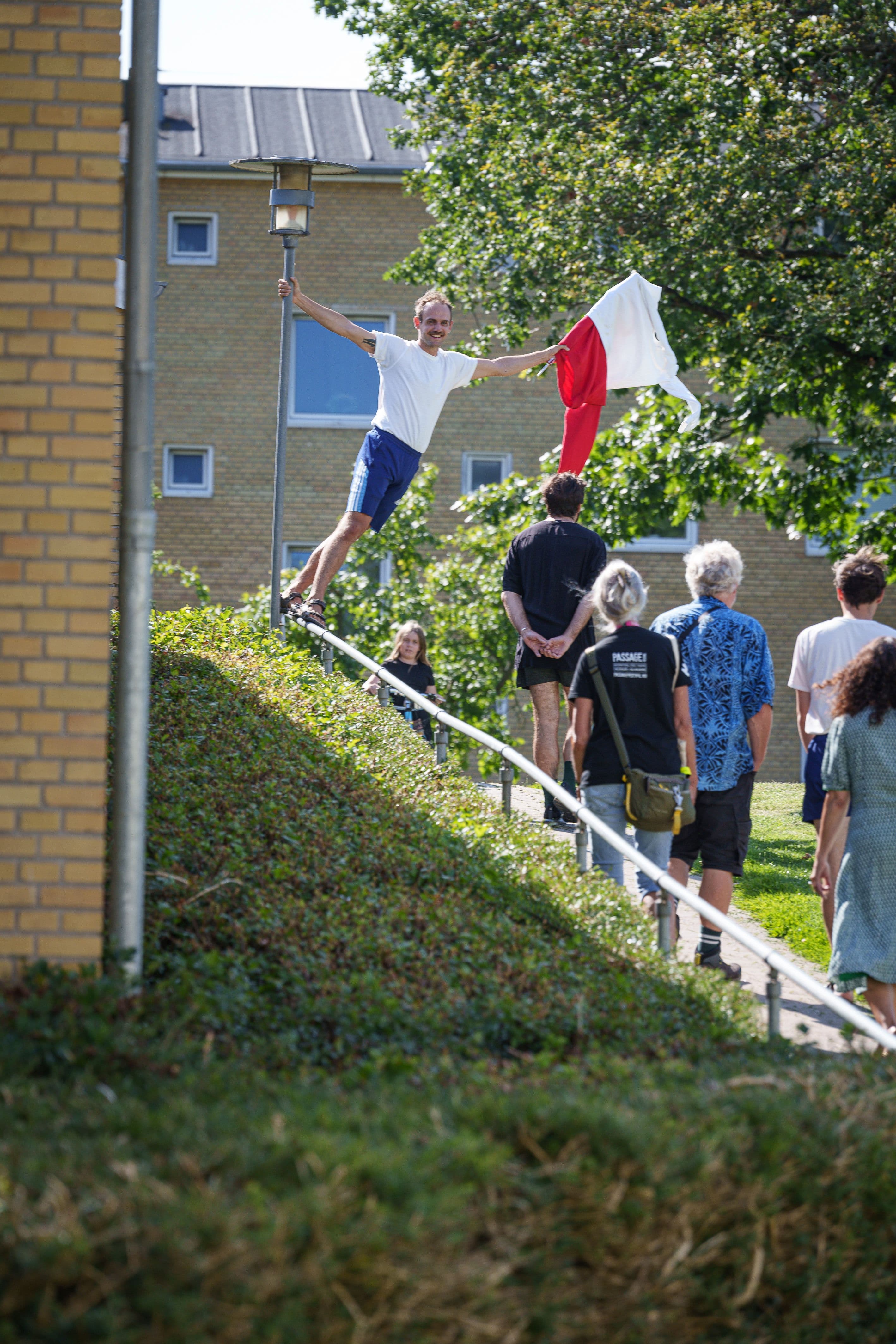
Built to Break: Architektur für Alle
Internationales Performance Kollektiv BOYS* IN SYNC
Built to Break: Architecture for All is a performance taking place in the urban space of Bornheim. During a guided tour of the Bornheimer Hang housing estate, designed by Ernst May, architectural knowledge is interwoven with the literature of Heinrich von Kleist. A fusion of history, design and literature.
 ©Max Illian
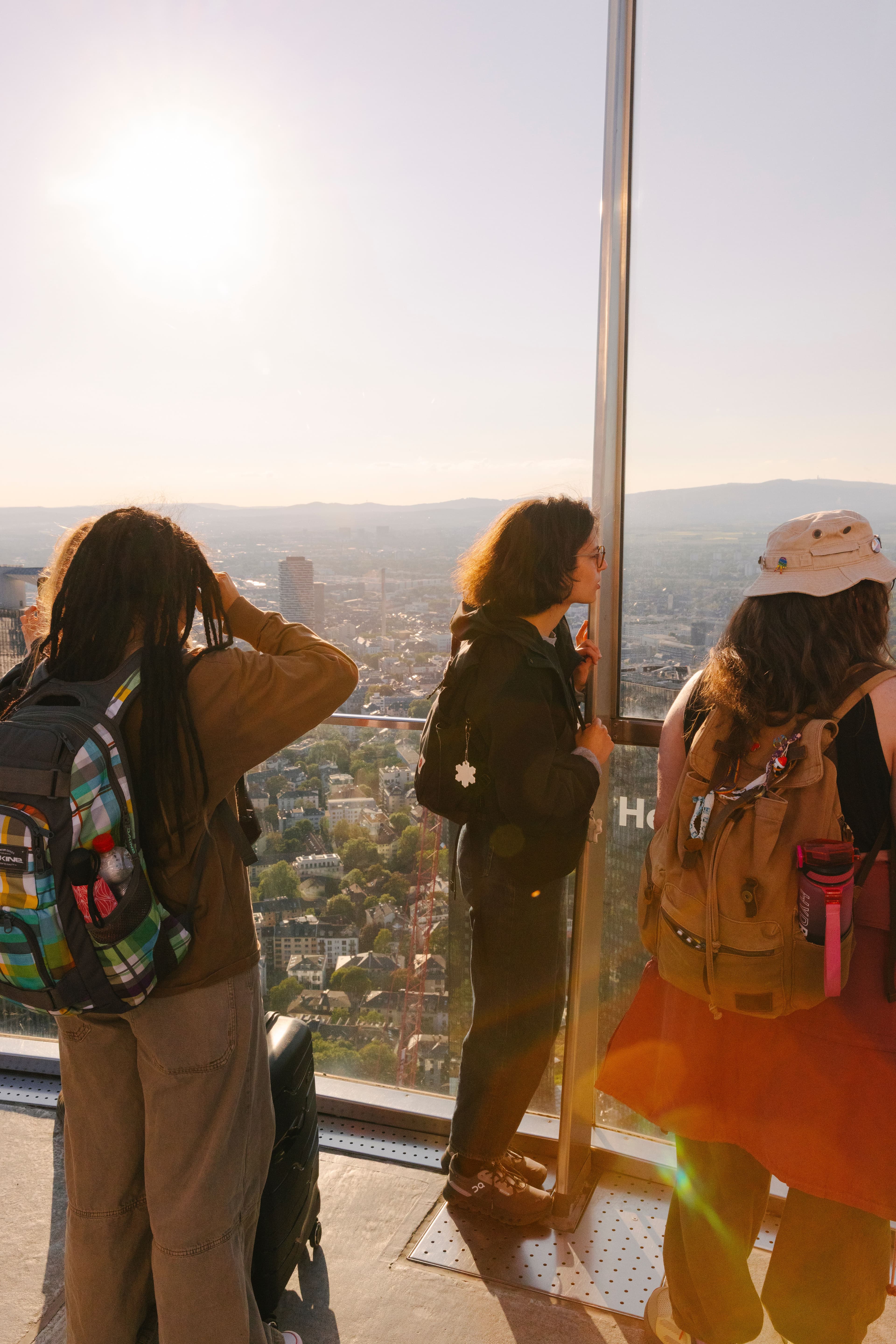
Stories and Hopes of the Arrivals to Rhine-Main Archipelago
CoMoon e. V. (de_colonialanguage, Ani Menua, Marina Solntseva, Denis Esakov)
Since the 1990s, millions of people have immigrated to Germany from North and Central Asia, the Caucasus, Eastern Europe and South-Eastern Europe. Their life stories have often been oversimplified by political categories – their qualifications devalued, their identities reduced to a single language. This project sees itself as an attempt to map this multifaceted landscape of experiences – an archipelago of stories, hopes and lived realities.
 ©Ben Kuhlmann
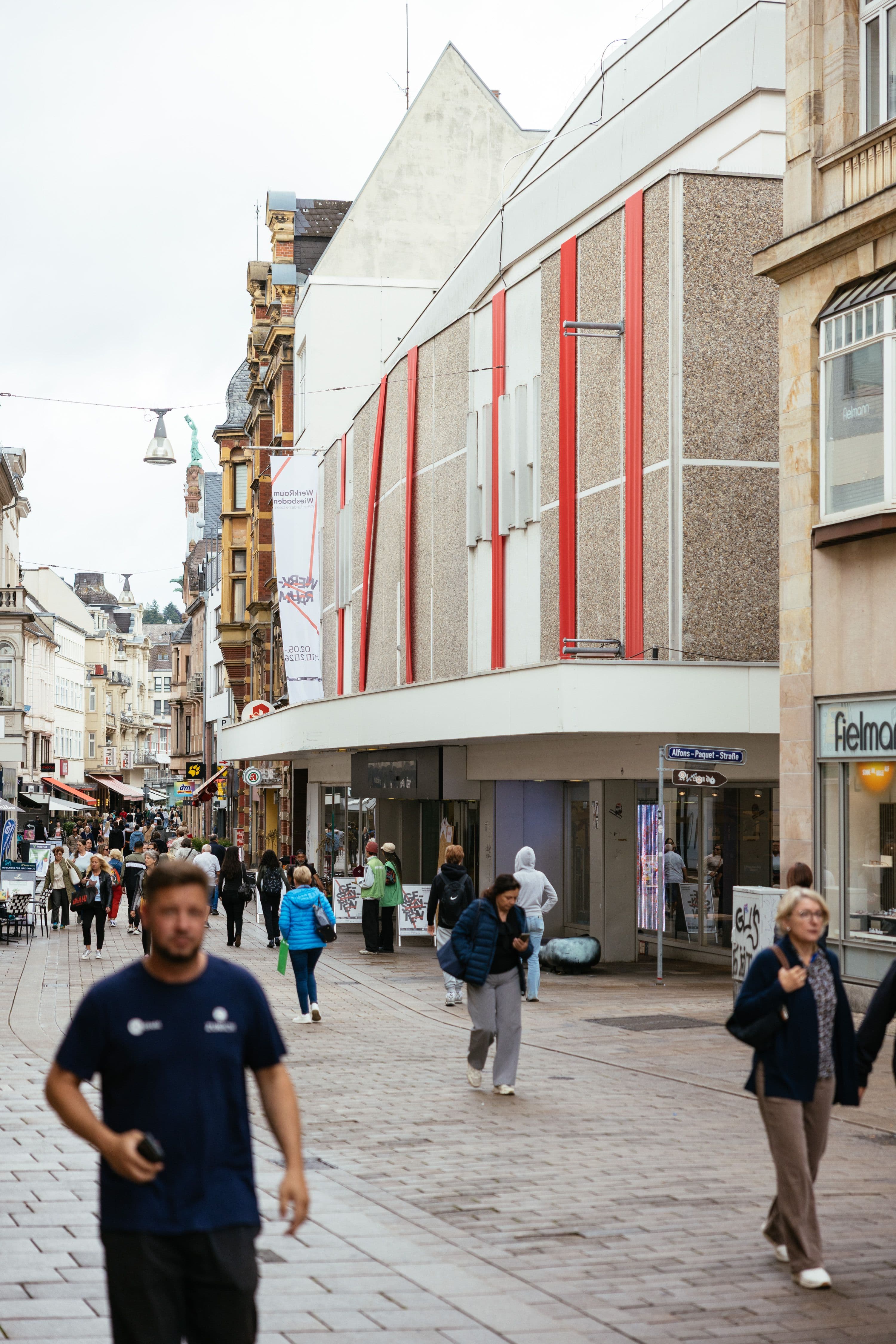
WerkRaum Wiesbaden – Offen für deine Ideen
Sandra Düsterhus, Sabine Philipp (sam – Stadtmuseum Wiesbaden)
WerkRaum Wiesbaden is transforming a empty department store in the heart of the city centre into a space for urban community, creativity and participation.
 ©Kultur einer Digitalstadt
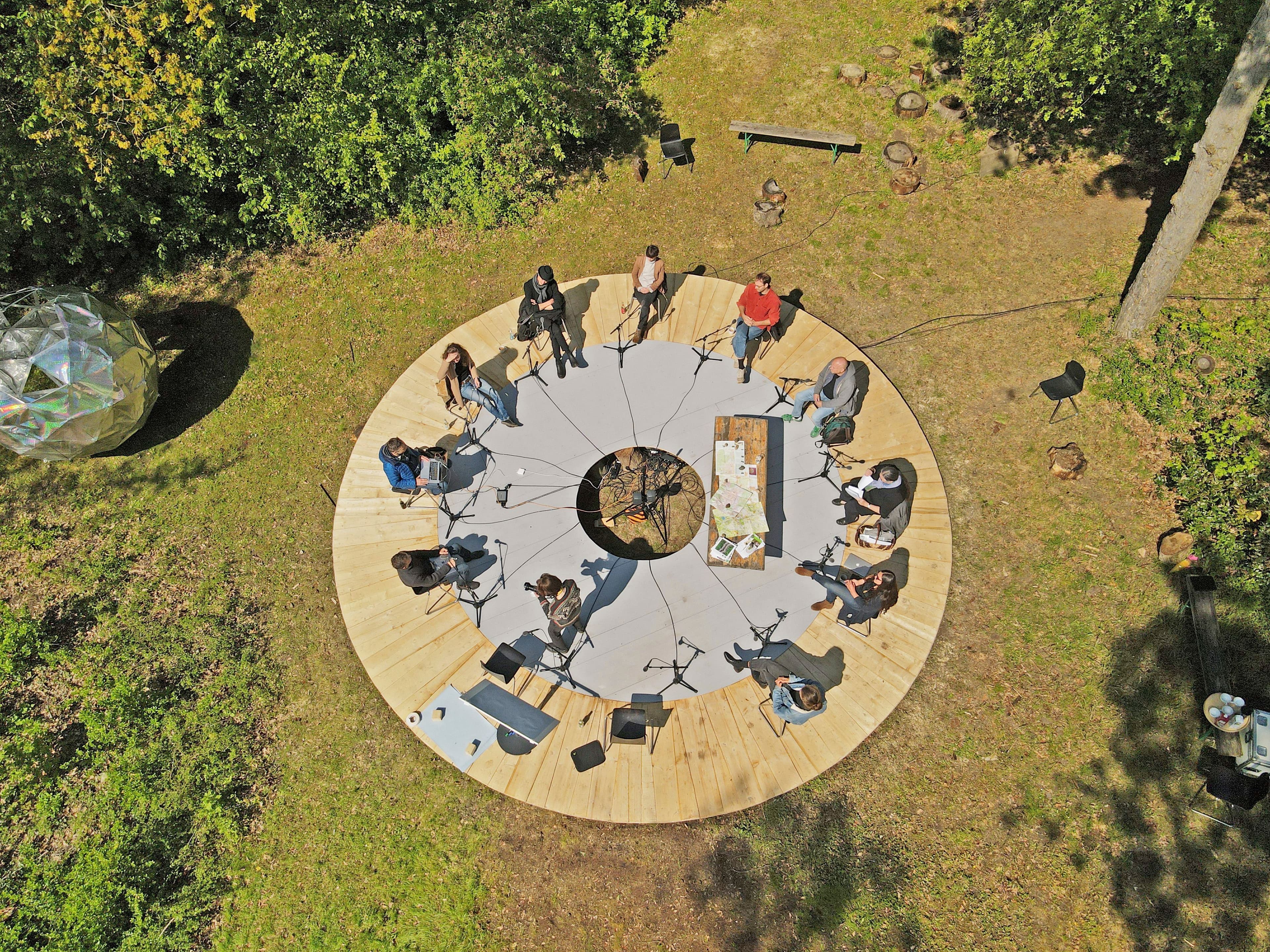
Re-Negotiating Space: Instrumente zur Neuverhandlung urbaner Räume zwischen Mensch und Natur
Kultur einer Digitalstadt e. V., hortopia.org
Since 2020, anthropogenic mass has exceeded the total living biomass of our planet. Re-Negotiating Space (RNS) is a series of dialogues, interactions and interventions that explore democratic tools for renegotiating urban spaces between human and planetary needs.
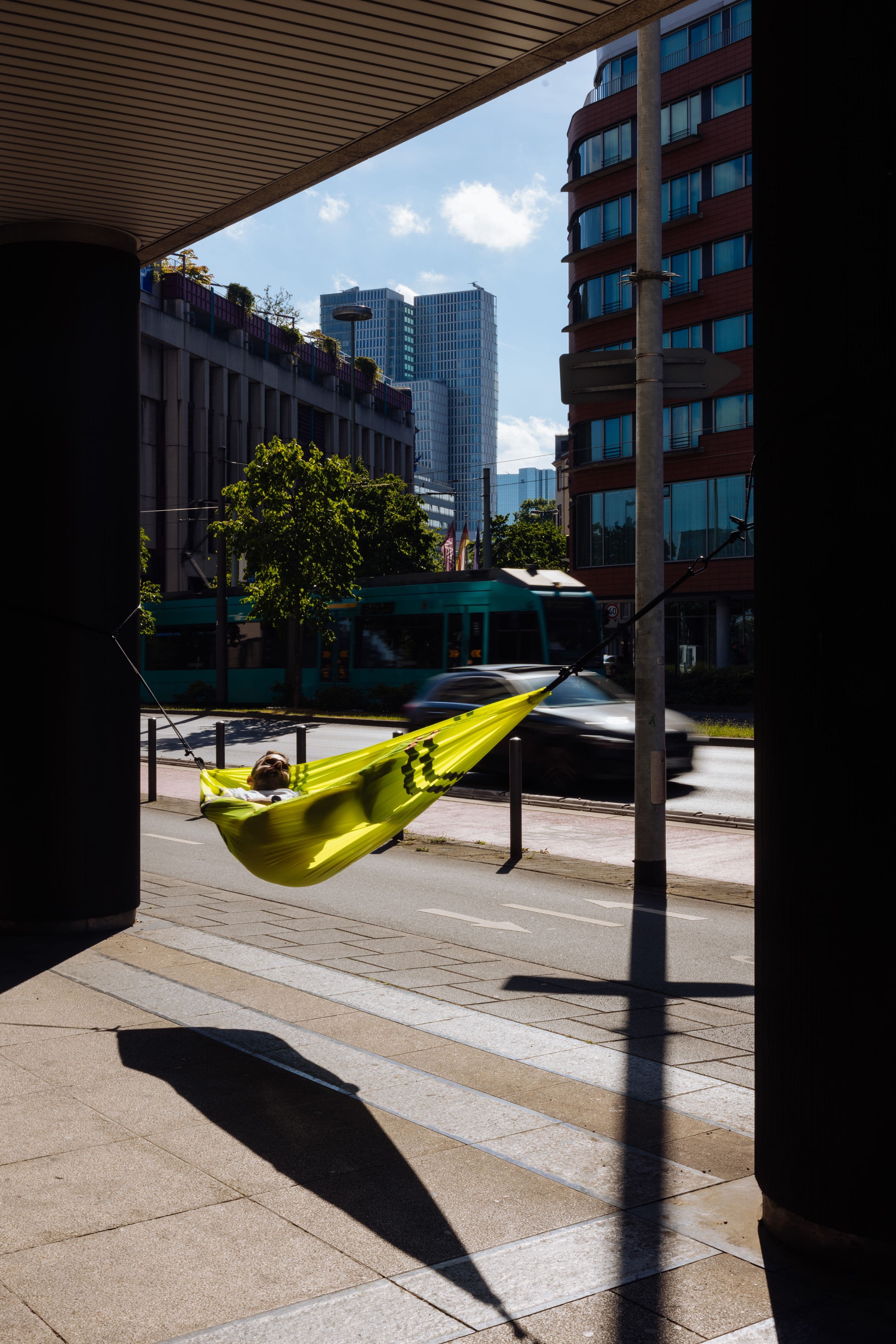 ©Ben Kuhlmann
Objects of Resistance
Mañana Bold, Otto-Brenner Stiftung, YRD.works
With its series Objects of Resistance, the Offenbach-based art collective Mañana Bold focuses on the non-human agents of democratic action – everyday objects that become symbols of protest and resistance.